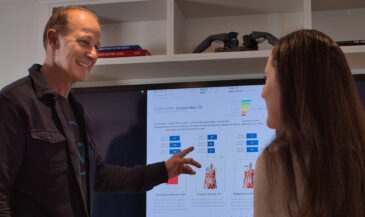

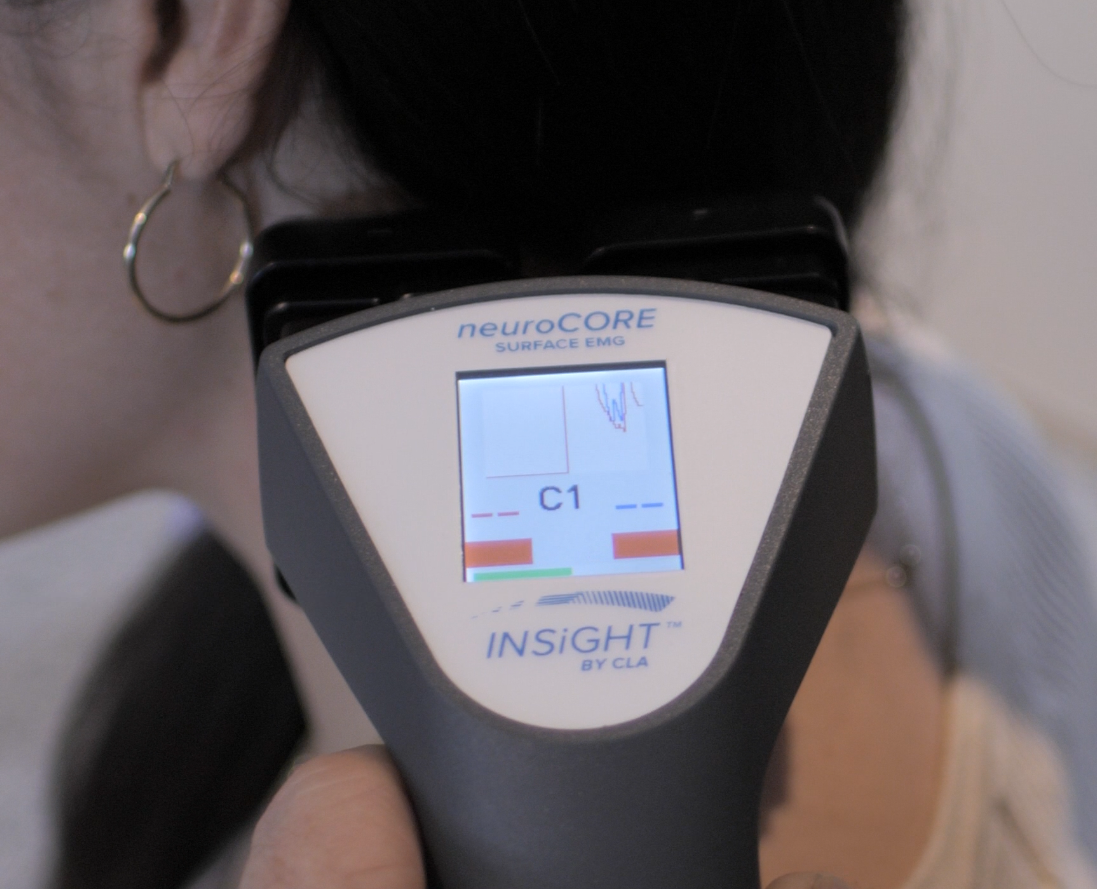
I’ve found that when patients see their own EMG scan, the conversation shifts. Suddenly, they’re not just talking about symptoms—they’re looking at how well their body’s motor system is performing. And when we can track those changes over time, we’re no longer guessing. We’re showing proof your care is making a difference.
How an EMG Works: From Brain to Muscle
The story starts in your brain and spinal cord. From there, motor neurons send electrical impulses through a nerve toward a muscle. Those signals tell the muscle fibers to contract. Every one of those signals has a measurable action potential, and EMG is the technique for measuring it.
There are two main ways to do an EMG:
- Needle EMG – Used in hospitals by a neurologist to diagnose specific nerve or muscle disorders, like amyotrophic lateral sclerosis and focal nerve damage.
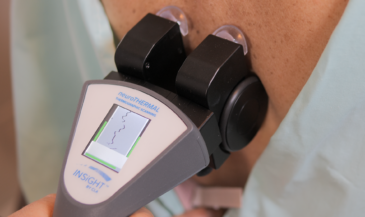
- Surface EMG (sEMG) – What we use in chiropractic. Small sensors (electrodes) on the skin pick up the electrical activity of multiple postural muscles at once. It’s quick, safe for all ages, and ideal for tracking changes visit by visit.
In both cases, the electrical activity picked up by the electrodes is amplified and shown as a form of waves. At rest, healthy muscle show little activity. When you contract your muscle, the waveforms change shape and size, showing us how the nerves that control that muscle are firing.
What EMG Reveals in Practice
In my years with surface EMG, I’ve learned it tells you three main things:
- How much energy is being used – Are muscles working too hard just to keep you upright?
- How balanced the system is – Are both sides of the spine sharing the load evenly?
- How well the load is distributed – Are a few areas overcompensating for weaker spots?
When you see high amplitude during a light task, it can mean the system is burning extra fuel because of nerve dysfunction. Low readings may signal fatigue or disuse. Uneven patterns often reveal chronic compensation.
And here’s the part patients love: you can show them their own data. That’s powerful. It’s not about scaring them with “bad” results—it’s about helping them understand how their nervous system is performing and how it can improve.
Learn more about INSiGHT scanning?
Fill this out and we’ll get in touch!
"*" indicates required fields
The Limits of EMG
It’s just as important to know what EMG doesn’t do:
- It’s not a scoliosis diagnosis tool, though it can show muscle imbalance around a curve.
- It doesn’t “measure pain” or discomfort. EMG is purely motor.
- Without a solid normative database, EMG numbers are just that—numbers.
Bottom line—EMG findings should always be part of a bigger picture, alongside your HRV and thermal exams, health history, and palpatory findings.
From Measurement to Mastery: INSiGHT’s neuroCORE
Here’s where things get exciting. In chiropractic, the EMG test really shines when you pair it with tools built for our profession. The INSiGHT neuroCORE instrument uses high-grade sensors and chiropractic-specific protocols to measure paraspinal muscle function with precision.
With neuroCORE, you can compare your patient’s results to a trusted normative database, track changes in motor control patterns, and show side-by-side scan views over time. That’s huge for both clinical certainty and patient engagement.
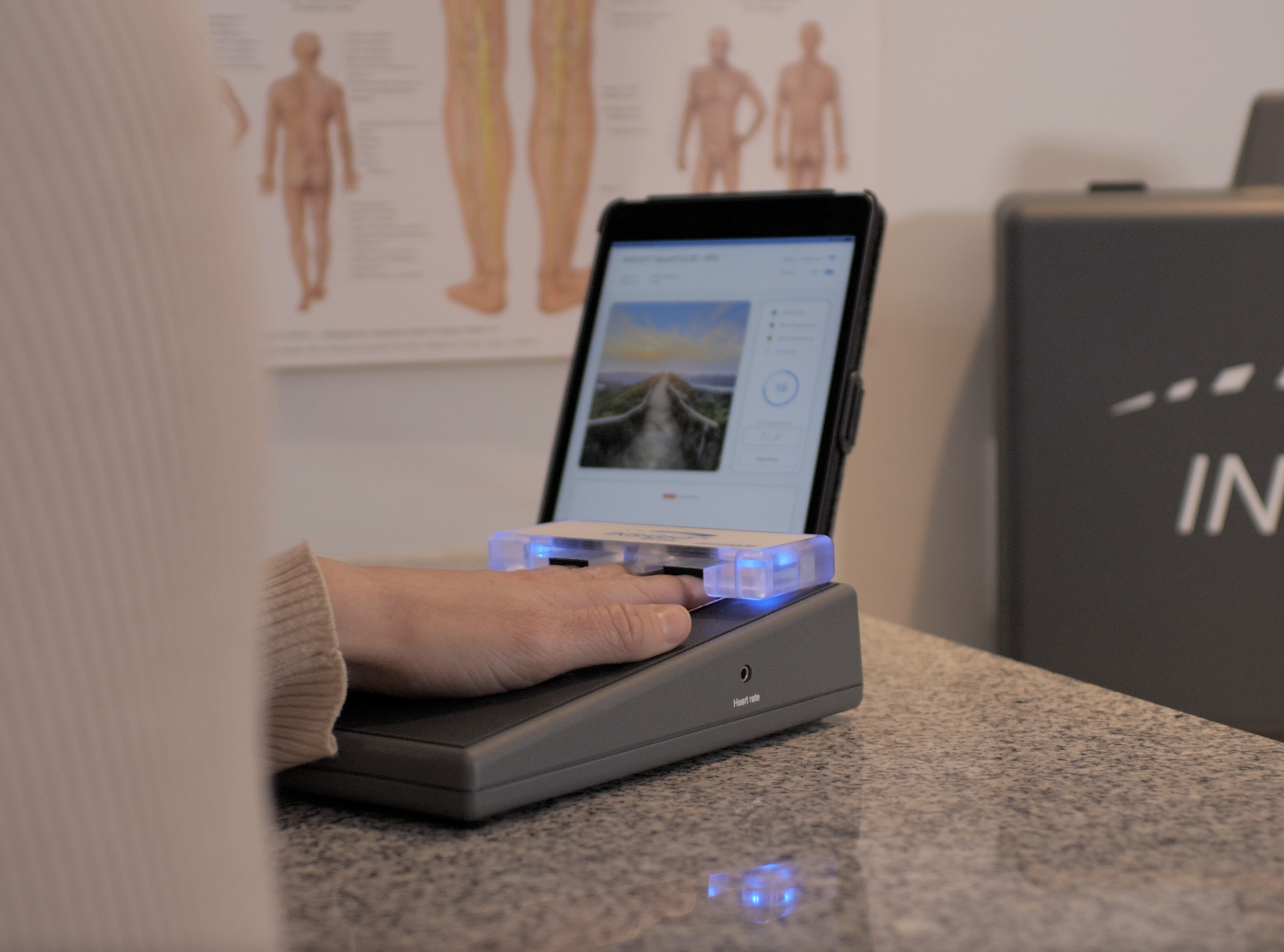
We often combine neuroCORE with our other INSiGHT scans—neuroTHERMAL and neuroPULSE HRV—so the patient gets a complete picture of their neurological performance. When you roll these into the CORESCORE, you’re not just showing them a number—you’re showing them their progress in living color.
Bringing the Nervous System into Focus
So, what is electromyography? It’s more than a diagnostic test. It’s a way of making the invisible visible. It’s how we can help detect neuromuscular abnormalities, track adaptation, and show the small but important changes that lead to bigger breakthroughs in resilience.
For me, EMG is one of the most valuable conversations I have with patients. It keeps them focused on function, not just symptoms. It helps them see that chiropractic care is about unlocking performance, not just relieving today’s stiffness.
Every scan is a chapter in their story. And with the right tools, we can read that story together—and guide it toward a healthier, more adaptable future.