

As chiropractors, we look at range of motion as a practical window into performance. It is a simple way to see how a joint and the surrounding connective tissue are cooperating with the body’s control center. You notice it during daily activities like reaching into the cupboard, turning your head to shoulder check, or getting down to the floor to play with a child. If these simple tasks feel restricted, there is often more going on than stiff muscles.
In this article, we will define what is range of motion clearly, review the types of range of motion, and explain how to measure range of motion. We will cover the factors affecting range of motion, how to perform range-of-motion exercises, and how INSiGHT scanning technology connects what you see in movement with what is happening neurologically beneath the surface.
What Is Range of Motion
Range of motion describes the total amount of motion available in a joint or series of joints. In clinical terms, it shows how far a joint can move through its arc when guided by the nervous system. When signals are clear, joint movement feels effortless and balanced. When signals are disrupted, motion of a joint can feel restricted or guarded.
Range of motion is usually expressed in degrees and varies by the specific joint being evaluated. A shoulder expects a wider arc than a knee, and a hip moves differently than the spine. The normal range of motion for each body part depends on skeletal design, the elasticity of the connective tissue, and how well the nervous system coordinates each movement of a joint. Because adaptability fluctuates with fatigue and stress, studies on heart rate variability show that range of motion may change throughout the day.
Clinically, chiropractors analyze joint motion to evaluate how the body performs. Reaching, turning, bending, and rising all depend on efficient joint movement. When there’s a limited range of motion, these simple actions become strained, pointing to neurological interference or postural imbalance. Understanding what is range of motion helps you connect movement patterns with the health of the control system that drives them.
- Amount of motion: How far a joint moves before resistance or guarding appears.
- Quality of motion: Whether motion in a joint is smooth, symmetrical, and confident—or hesitant and choppy.
- Motion available: The real-world envelope you observe compared with the expected normal ROM.
- Functional carryover: Whether the improved ROM shows up in daily activities such as reaching or bending.
At its core, range of motion is not just about flexibility—it’s about communication. It shows how well the brain and body cooperate to produce balanced, efficient movement.
The Three Types of Range of Motion
Clinicians divide motion into three types of range: active range of motion, passive range of motion, and AAROM (active-assisted range of motion). Observing all three provides a complete picture of how the nervous system organizes movement and how the tissues behave under different loads.
- Active Range of Motion (AROM): Movement created voluntarily by the patient’s own muscles. It reflects coordination, timing, and control. Active ROM is often slightly less than the full passive limit because of internal tension.
- Passive Range of Motion (PROM): Movement performed by an outside force—a chiropractor, physical therapist, or gravity. During passive movement, the patient remains relaxed. It represents the maximum range of motion the joint can achieve without muscular effort.
- Active-Assisted Range of Motion (AAROM): A blend of the two, where the patient initiates the motion but receives partial assistance from an external aid. AAROM is commonly used in range of motion therapy during recovery or neurological retraining.
Comparing active and passive values helps identify whether a restriction comes from tissue tension or altered motor control. Studies in systems biology show that the nervous system adapts dynamically to these differences, influencing how muscles contract and relax during movement.
Understanding these types of ROM gives chiropractors a framework for analysis—seeing not only how far the joint moves, but how confidently the nervous system directs it.
How the Body Moves: Motions and Planes
To understand what is range of motion, you must understand how each joint moves through planes. Every motion in a joint occurs within three cardinal planes: sagittal, frontal, and transverse. These planes define how each body part contributes to coordinated movement.
- Sagittal plane: Forward and backward movements such as flexion and extension.
- Frontal plane: Side-to-side motions like abduction and adduction.
- Transverse plane: Rotational actions where the joint turns around its axis.
Each specific joint demonstrates certain strengths. The knee favors flexion and extension; the shoulder and hip operate in multiple directions. When any of these patterns are missing, it signals imbalance. Observing how a joint behaves across all planes helps the chiropractor see how the brain coordinates complex joint movement.
When the nervous system feels safe, motion becomes smoother and freer—a finding supported by studies on sympathetic regulation showing that autonomic balance affects muscle tone and fluidity of motion.
Learn more about INSiGHT scanning?
Fill this out and we’ll get in touch!
"*" indicates required fields
Why Range of Motion May Be Limited
A limited range of motion can develop for many reasons—mechanical restriction, tissue stiffness, or protective neural responses. Understanding these factors affecting range of motion ensures you address the true cause rather than just stretching a tight area.
- Connective tissue resilience: Stiffness in the capsule, ligaments, or tendons can limit the range of motion.
- Neuromuscular control: When the body anticipates discomfort or instability, it guards the motion available. This is a primary finding when assessing for vertebral subluxations.
- Inflammation and swelling: These mechanical obstacles restrict mobility and reduce coordination.
- Systemic stress: High sympathetic tone or fatigue can reduce adaptability, making the motion of a joint less fluid (peer-reviewed studies on vagal balance support this link).
In chiropractic care, these findings are a map, not a label. Restrictions are feedback from the nervous system that something needs attention. Through precise analysis, a chiropractor identifies whether the cause is structural, neurological, or both, and designs a care plan that restores coordination rather than forcing motion.
How to Restore and Improve Range of Motion
To improve range of motion, the exercise must match the limitation. If the barrier is tissue stiffness, focus on stretching exercises and mobility work. If timing or coordination are the issue, progress to control and therapeutic exercise. Restoring balance requires both approaches. Chiropractic adjustments are beneficial when joint and neurological control issues are present.
- Range of motion exercise: Repeated practice through the safe arc builds coordination and nourishment in the joint.
- Range-of-motion exercises: Gentle drills that reeducate the nervous system and improve fluidity.
- Strengthening exercises: Add stability once motion improves to make gains last.
Making the Invisible Visible With INSiGHT Technology
Chiropractors who use INSiGHT scanning technology connect what they see in motion to what they measure neurologically. Range of motion expresses the outcome of the body’s control systems, and INSiGHT’s neuroTECH’s 3 dimensional analysis shows the patterns behind that movement.
- neuroCORE (sEMG): Displays postural tension and energy output that often parallel restricted joint motion patterns (research supports sEMG as a reliable tool for measuring muscle tone changes).
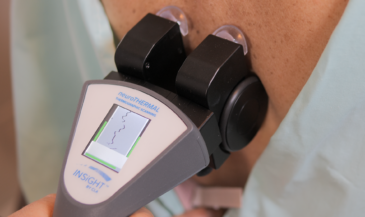
- neuroTHERMAL: Evaluates autonomic balance and temperature asymmetries. Thermography studies show strong reliability in detecting autonomic dysfunction and subluxation-related stress.
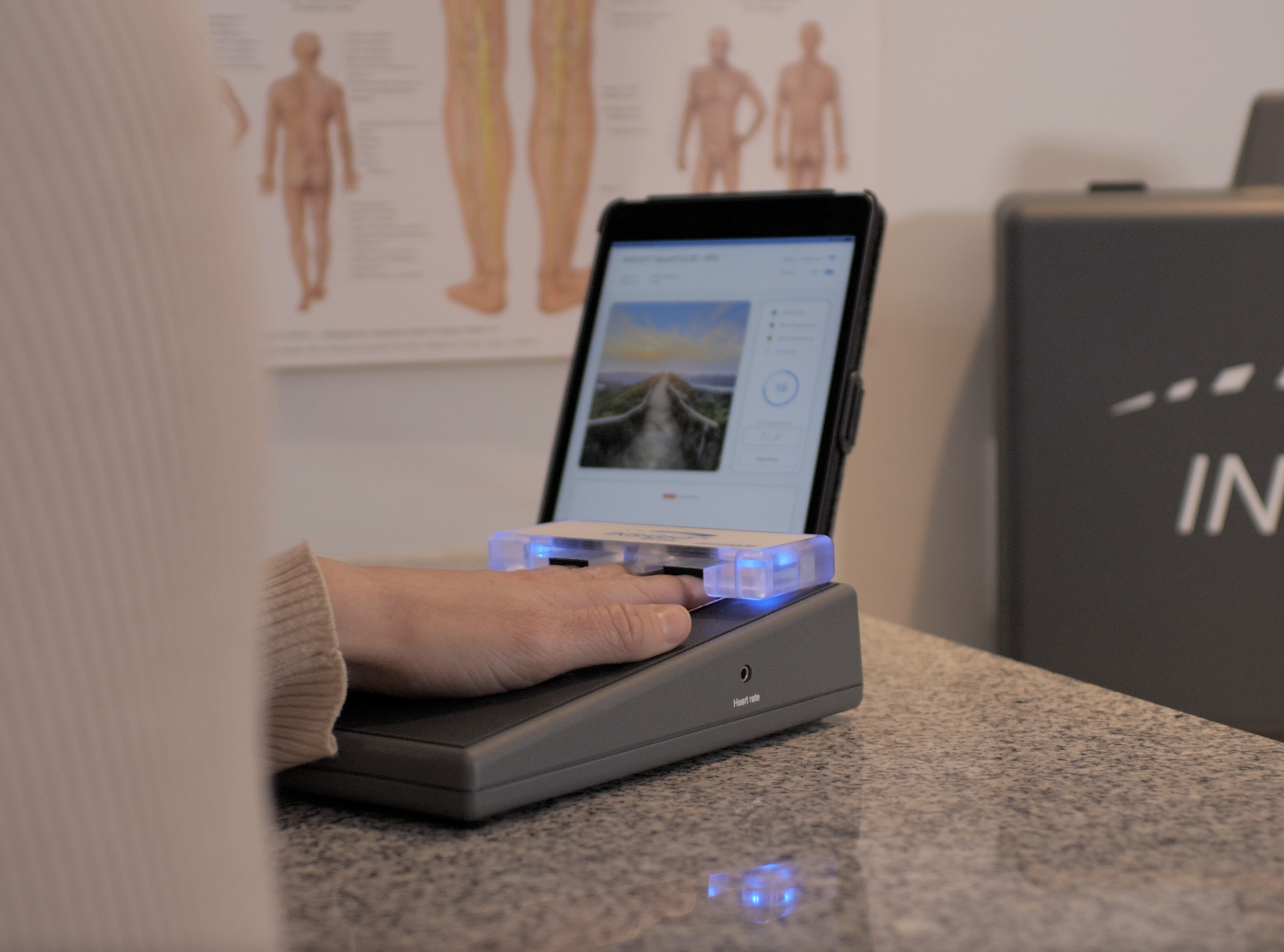
- neuroPULSE (HRV): Tracks adaptability and recovery. Clinical trials confirm HRV’s value for evaluating stress resilience and nervous system adaptability.
Synapse software unites these findings in the CORESCORE report, giving chiropractors objective data and scan views that help patients visualize progress. INSiGHT scanning does not create a care plan—it provides measurable proof of how the nervous system and movement patterns are improving together. It’s the bridge between motion and control, showing patients that better neural efficiency translates into freer movement.
Turning Movement Into Measurable Progress
To integrate range of motion findings effectively, combine manual exams with objective scans and periodic rechecks. A simple rhythm builds clarity for both doctor and patient:
- Baseline: Record angles using a goniometer or the Schober test, document joint quality, and complete a full INSiGHT scan.
- Early recheck: Compare passive or active findings with updated sEMG and thermal results to verify reduced postural tension.
- Progress review: When flexibility and coordination improve, link these gains to increased adaptability on HRV within Synapse.
- Stabilization: Maintain the motion available with strengthening and therapeutic exercise routines.
As systems-based chiropractic research emphasizes, this process brings science, structure, and certainty to the care process. The goal is not just to make the joint move farther but to make it move better—organized, efficient, and neurologically stable.