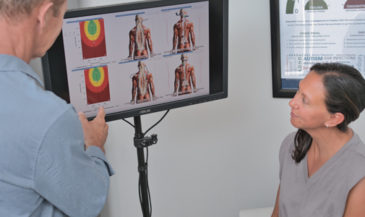


A nerve-first approach starts with a clear look at the spine and the neurological signals running through it. Chiropractors using INSiGHT scanning technology make that invisible story visible, seeing where nerve tension is building and how the system is adapting. When patients see their findings in simple, visual terms, the path forward makes sense and their care plan has purpose.
Understanding Sciatica: It Starts with the Nerves
Sciatica is a set of symptoms that trace back to irritation of the sciatic nerve, the largest nerve in the body. That nerve is built from several nerve root branches that exit the spine in the lower back. When one of those roots experiences compression or inflammation, the message travels. People often feel sciatica pain, tingling, or numbness starting in the buttock and moving down the back of the leg. Though the sensation is in the leg, the problem almost always begins higher up, where the roots leave the spinal canal.
The common structural culprits are well known. A herniated disc can press a nerve root. Spinal stenosis narrows available space for nerves. Arthritic changes and a bone spur can irritate the root as it passes through a tight opening. At the same time, prolonged sitting, deconditioning, and postural adaptations can load the spine unevenly, increasing local tension and changing how the nervous system directs stabilizing muscles.
Clinically, the pattern is consistent. Most individuals report some form of back pain along with leg symptoms. They may notice a sharp or electric quality with certain movements, a slump in standing tolerance, or a tug when they cough or sneeze. As chiropractors, we connect these reports to a careful examination of the spinal segments, the quality of motion at each level, and the health of the neurological pathways that run through them.
- Where it begins: Irritation at the nerve root in the lower back.
- How it feels: Radiating leg symptoms, numbness, weakness, changes in balance or stride.
- Why it persists: Ongoing compression, postural loading, and a nervous system stuck in protective patterns.
Common Causes and When to See a Sciatica Doctor
Most sciatica begins at the source, where a nerve root exits the spine in the lower back. The sciatic nerve carries signals all the way down the leg, so irritation near the origin often shows up far from where the problem starts. The most frequent structural drivers include a herniated disc or herniated disk that creates local compression, age-related narrowing such as stenosis, or a bone spur near the joint opening. Even without large structural changes, deconditioning, prolonged sitting, and postural adaptations can keep the area under load and perpetuate symptoms.
Patients commonly describe a mix of back pain with radiating leg symptoms. You may hear about sciatica pain that shoots with certain movements, a pull with coughing or sneezing, or a patch of numbness or tingling in the buttock or along the calf. These findings point us to evaluate the specific spinal level, motion quality, and how the neuromuscular system is compensating around the problem. The key is to determine whether the nerve irritation is acute and direct, or part of a longer pattern of tension and recovery breakdown.
Knowing when to see a sciatica doctor matters. For non-emergent cases, a neurologically focused chiropractor is an ideal first stop because we examine both the mechanical and neurofunctional sides of the problem. If red flags are present, medical evaluation should occur immediately.
- See a doctor promptly if: you have progressive weakness, significant new numbness, fever, history of cancer, recent major trauma, or changes in bowel or bladder control.
- See a chiropractor if: your sciatica has persisted more than a few days, is not improving with rest, or keeps returning. Objective assessment can clarify whether a specific nerve root is under compression and how the surrounding spinal segments are adapting.
Learn more about INSiGHT scanning?
Fill this out and we’ll get in touch!
"*" indicates required fields
What Kind of Doctor Treats Sciatica?
When people search for a sciatica doctor, they are really asking who can best identify the source of irritation at the nerve root and guide a safe path back to function. Several providers can play a role. The key is matching the phase of the problem with the right skill set, starting with a careful look at the spine and lower back and progressing to collaborative support if needed.
Conventional Medical Pathways
Primary care physicians are often the first stop. They may order imaging and suggest short trials of antiinflammatory strategies. Many will refer to physical therapy as part of early treatment to improve mobility and strengthen support around the spine. If symptoms are severe, a pain specialist may consider a targeted injection to reduce inflammation near the affected nerve root. In select cases where structural compromise is significant or unresponsive, orthopedic surgeons evaluate for procedures that create space and reduce compression.
- Strengths: Good for screening red flags, coordinating medications when appropriate, and triaging advanced imaging or specialty referrals.
- Limitations: These pathways often focus on symptom and pain relief without addressing how the nervous system is adapting at the spinal level.
Neurologically Focused Chiropractic Pathway
Chiropractors trained in a nerve-first approach evaluate how the spine moves, where a nerve root may be irritated, and how the neuromuscular system is compensating. The goal is to restore motion, reduce local pressure, and improve nervous system performance so the body can recover naturally.
How a Chiropractor Helps Patients with Sciatica
The first job of a sciatica doctor who practices chiropractic is to identify where the irritation begins and how far the patterns have spread. Because sciatica travels along the path of the sciatic nerve, we focus evaluation where the nerve root exits the spine in the lower back, then follow symptoms through the buttock and leg. Our aim is to clarify whether the driver is a herniated disc, spinal stenosis, or postural loading that keeps the area under compression.
Initial Assessment
A thorough exam blends neurological and orthopedic checks with motion palpation of the spinal segments. Objective scanning and imaging help confirm the level and nature of the irritation so your care begins on solid ground.
Adjustments and Manual Therapies
Chiropractic adjustments restore motion and calm neurological response. Flexion-distraction or Cox-style spinal decompression can create a decompressive effect that eases contact on the nerve root. Targeted soft-tissue work helps release protective muscle patterns.
Restoring Stability and Function
As irritation calms, we shift toward stability. Exercises for the lower back and core build endurance. Ergonomic coaching addresses the positions that perpetuate sciatica pain. When patients need additional support, collaboration with physical therapy helps with graded loading and movement retraining.
The Neurological Story Behind Sciatica
There is more to sciatica than irritated joints and stiff muscles. At its core, this is a neurological story. Persistent irritation can lead to sympathetic overdrive—a state where the nervous system remains on alert. Research on stress physiology shows that this pattern limits recovery and keeps the sciatic nerve irritated. When we calm neurological distress and restore efficient motion, the body can reorganize and regain capacity.
How INSiGHT Scanning Technology Supports Care for Sciatica
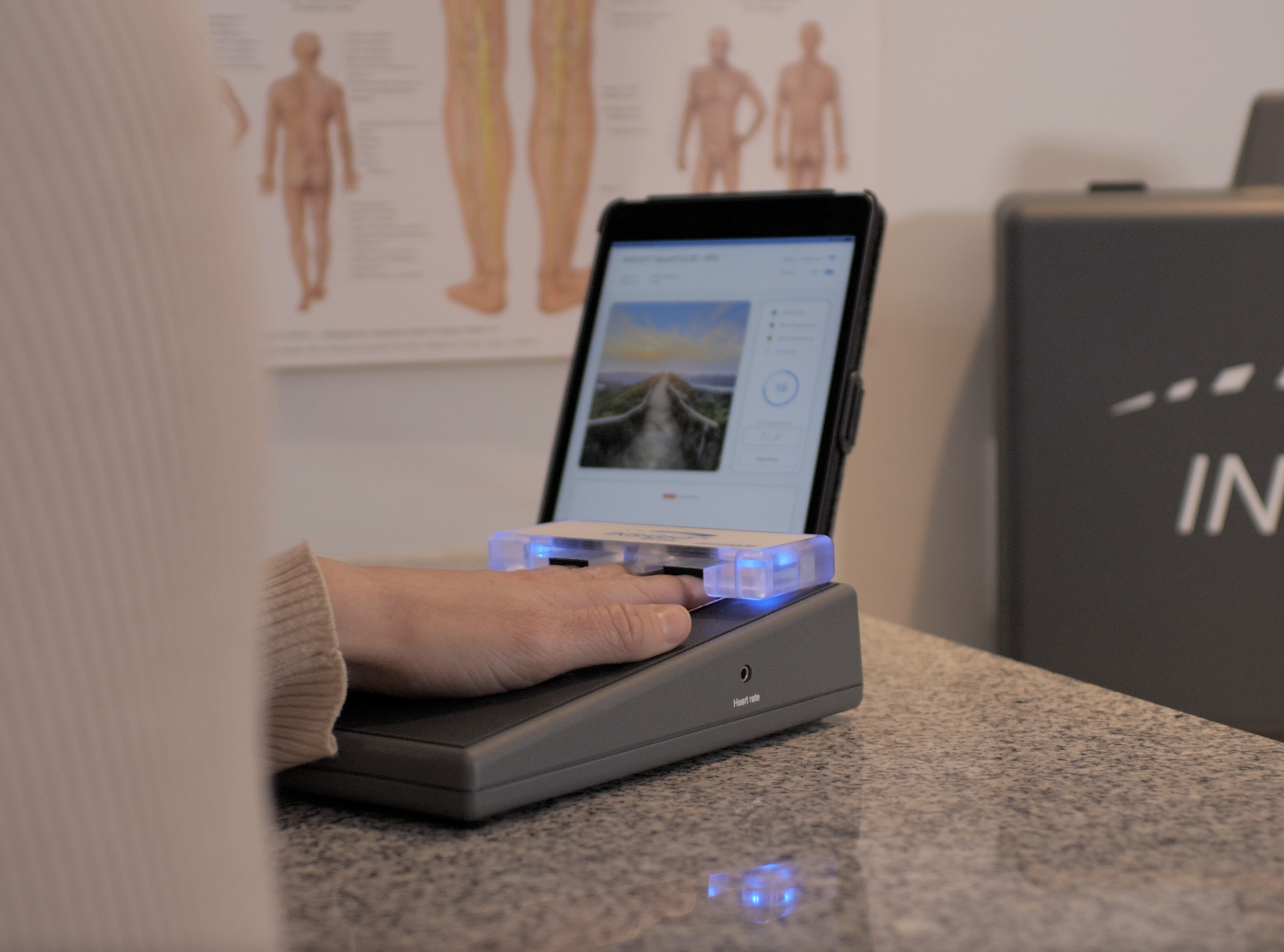
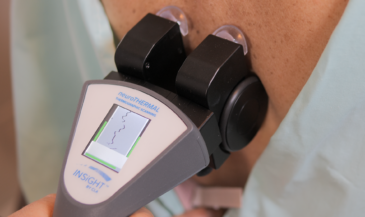
Objective data changes the conversation. The neuroTHERMAL measures bilateral temperature differences that reveal autonomic imbalance. The neuroCORE uses surface EMG to assess paraspinal muscle activity and symmetry. And the neuroPULSE measures HRV to evaluate adaptive reserve and balance between sympathetic and parasympathetic tone. Together, they form the INSiGHT neuroTECH and Synapse software suite, transforming complex neurology into data patients can see and understand.
Validated INSiGHT research shows these tools meet high standards of reliability. The CORESCORE combines these findings into one metric, giving chiropractors a clear baseline for nervous system performance. When re-scanned, patients see their nervous system adapting and recovering—a visual story of progress that builds trust and certainty.
The Takeaway: Choosing the Right Path with a Nerve-First Mindset
Choosing a sciatica doctor is really about choosing a strategy. Start with a provider who understands that sciatica is a neurological problem with a mechanical trigger. A neurologically focused chiropractor will evaluate the spine, identify the level of irritation, and use adjustments and supportive strategies to restore clarity to the system. With INSiGHT scanning technology, you can make that process visual and measurable from day one.
There is a place for every professional on the care continuum, from primary care and physical therapy to specialty consults when warranted. The unifying theme is simple: measure what matters, communicate clearly, and keep the plan anchored to objective findings. Do that, and you help more people move without fear, recover more fully, and prevent flare-ups from taking over their lives. That is the promise of a nerve-first, drug-free approach to sciatica that patients can feel and see.