

But in high-retention practices, commitment starts much earlier than that. In many cases, the decision to stay in care is made before the first adjustment ever happens.
Patients may not say it out loud, but they decide very early on whether this feels like a clear, intentional process or something they are simply going to try and see how it goes.
That early decision matters more than most chiropractors realize.
Commitment Comes Before Retention
Retention is not a scheduling problem. It is a commitment problem.
And commitment starts as a feeling, not a contract.
Do I feel like this doctor knows with certainty where this is going?
Do I feel like there is a plan with checks and balances, not just a visit by visit experience?
Do I have the necessary clarity on what I am committing to?
When those questions are answered early, retention takes care of itself. When they are not, patients stay cautious. They comply on the surface but hold back internally.
High-retention practices recognize these moments and address it before hands-on care even begins.
The First Adjustment Is Not the First Retention Moment
It is easy to believe that retention is earned once patients feel a physical change. That can help, but it is not the foundation.
The foundation is laid before the first adjustment.
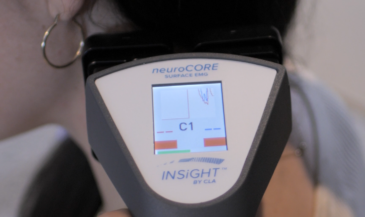
It’s in how scan and exam reporting is introduced.
It’s in how information is structured. Telling not selling.
It’s in the experience and whether it feels intentional or improvised.
Patients are paying attention early, not just to what you say, but to how confident and organized the process feels.
When the process feels clear, patients relax. When it feels uncertain, they stay guarded.
Learn more about INSiGHT scanning?
Fill this out and we’ll get in touch!
"*" indicates required fields
Why Unclear Processes Lead to Drop-Off Later
Most patient drop-off does not come from dissatisfaction. It comes from ambiguity.
Hesitation often looks subtle. A patient says, “Let’s see how it goes.” They avoid long-term conversations. They quietly disengage once symptoms calm down. They miss appointments.
This does not mean they did not like the care. It means they never fully committed to the journey.
High-retention practices prevent this by removing uncertainty early.
What High-Retention Practices Do Before the First Adjustment
They slow down the right parts of the process.
They do not overwhelm patients with information.
They do not rush into care without reporting using objective findings.
Instead, they create clarity.
They help patients understand what is being measured, why it matters, how progress will be tracked, and what the phases of care look like.
When patients can see the shape of the journey, they stop evaluating whether they should stay and start focusing on progress.
Why Structure Builds Retention Faster Than Results
One of the biggest misconceptions in chiropractic is that results automatically create retention.
Results matter, but procedural structure and consistency matter first.
Without structure, even good results feel temporary. Patients assume care is finished once they feel better, because nothing has framed improvement as part of a longer process.
High-retention practices use care planning structure to anchor expectations early.
When scans, reports, and explanations follow a consistent flow, patients do not have to guess what improvement looks like. They know how change is measured and what comes next.
That clarity builds confidence long before outcomes fully show up.
Retention Grows When the Next Step Is Clear
Patients commit when the next step feels obvious.
When care feels like a sequence rather than a series of decisions, retention stops being something you have to sell. Patients assume continuity because the process supports it.
That shift is the difference between short-term compliance and long-term commitment.
Bringing It All Together
High-retention practices understand something most do not.
Patients do not decide to stay in care after results appear.
They decide when the process makes sense.
Before the first adjustment, patients are already evaluating whether this feels like a structured journey or an open-ended experiment.
When you create clarity early, commitment becomes the natural response.
Not because you pushed for it.
Because it felt right.
And that is what separates high-retention practices from the rest.