
This disconnect is one of the biggest challenges in modern chiropractic communication. Stress and neurological distress are talked about constantly, but rarely measured in a way patients can see. When everything stays abstract, it is easy for people to underestimate what their nervous system is actually dealing with. This is where objective physiological signals begin to matter.
A galvanic skin response sensor enters the conversation here. Not as a diagnostic shortcut and not as an emotional lie detector, but as a way to make physiological arousal visible. By measuring electrodermal activity through sweat gland behavior at the skin surface, this technology turns invisible reactions into measurable data. For chiropractors focused on neurological scanning, that distinction matters.
What a Galvanic Skin Response Sensor Actually Measures
A galvanic skin response sensor measures changes in the electrical properties of the skin that occur when sweat appears on the surface. You will also see this described as galvanic skin response, electrodermal activity, or EDA. In many scientific contexts it is also referred to as electrodermal activity, because the emphasis is on electrical behavior at the skin surface rather than emotions or thoughts.
The mechanism is simple and grounded in physiology. Sweat contains electrolytes. When sweat glands in the skin begin to secrete, even in very small amounts, those electrolytes change how easily an electrical current passes across the skin surface. Skin conductivity increases and skin resistance decreases. A GSR sensor detects that change as skin conductance or electrical conductance. That shift is measurable, repeatable, and happens without conscious control.
Most GSR device setups use an electrode placed on the hands because the palms and fingers contain a high density of sweat gland structures and respond quickly to stimulation. The palm is especially responsive during emotional sweating, which is why palms and fingers are so commonly used in electrodermal measurements. Some published research also references alternative locations such as the forehead and cheeks, but the hands remain the most practical option for consistent sensor placement.
The most important clarification for chiropractors is this: a galvanic skin response sensor does not tell you whether something is good or bad. It does not interpret emotional states. It reflects intensity of arousal. That arousal can come from positive and negative stimuli alike. Excitement, anticipation, fear, pressure, surprise, or emotional stimulation can all create an increase in skin conductance. The GSR signal reflects that increase in arousal, not the meaning behind it.
- Electrodermal activity reflects sweat gland activity altering the skin’s electrical properties.
- Conductivity rises as sweat secretion increases and skin resistance drops.
- The signal reflects physiological arousal rather than emotion labels.
- The response is automatic and part of involuntary physiology.
The Neurophysiology Behind Galvanic Skin Response
To understand why a galvanic skin response sensor works, it helps to view the skin as an interface with the autonomic nervous system rather than a passive covering. Sweat glands in the skin are directly influenced by sympathetic activity. When the body shifts toward alertness, vigilance, or activation, sweat gland activity changes almost immediately. That change is what electrodermal activity captures.
This relationship ties directly into the sympathetic nervous system and the classic “fight or flight” response. When a stimulus appears, whether internal or external, sympathetic activity increases. Blood flow shifts. Muscle tone changes. Sweat secretion increases. These reactions occur before conscious awareness catches up. That is why electrodermal response data is often described as psychophysiological. It reflects both physiological and psychological processes without relying on voluntary reporting.
Electrodermal measurements typically show two patterns. There is a background level of skin conductance, and then there are rapid changes often described as phasic responses. These quick spikes, sometimes called GSR peaks, tend to follow a stimulus or emotional stimulation. Their timing and amplitude provide insight into physiological responses and emotional arousal. Many systems sample these signals at a defined rate, sometimes referenced in hz, to capture rapid changes accurately.
For chiropractors, this reinforces an important principle. The nervous system is always adapting. Arousal shifts moment by moment based on stimulation, perception, and load. A galvanic skin response sensor does not replace clinical insight, but it reminds us that neurological behavior is measurable long before symptoms demand attention.
How Galvanic Skin Response Sensors Collect and Interpret Data
A GSR device works by applying a very small electric current across the skin through paired electrodes and evaluating how easily that current travels. As sweat gland activity increases, electrical activity at the skin surface changes. Skin conductance increases while skin resistance drops. These changes form the foundation of GSR measurements.
The resulting GSR data typically includes a baseline pattern and rapid spikes following stimulation. These GSR peaks are often evaluated by their amplitude and timing relative to a stimulus. What matters clinically is restraint. Electrodermal measurements can evaluate changes in physiological arousal and sympathetic activity, but they do not explain why the response occurred. Interpretation must always account for context, environment, and the limits of the signal.
- GSR measurements reflect changes in skin conductance and skin resistance.
- Electrode contact quality affects signal reliability.
- EDA captures rapid physiological responses to stimulation.
- The signal supports observation, not diagnosis.
Where Galvanic Skin Response Fits and Does Not Fit in Chiropractic
A galvanic skin response sensor can support chiropractic conversations, but only when it stays in its proper role. It measures arousal through sweat gland behavior. It does not identify vertebral subluxation patterns. It does not localize neurological interference. It does not replace spinal or neurological assessment.
Used responsibly, a galvanic skin response sensor can help patients see that their system is reacting even when they feel “fine.” That awareness can support better conversations about stress, adaptability, and nervous system status. The foundation, however, remains neurological scanning designed for chiropractic interpretation.
Galvanic Skin Response Within Modern Neurological Scanning and INSiGHT Technology
When viewed in context, a galvanic skin response sensor becomes most useful as a supporting signal within a broader neurological framework. It shows physiological arousal. It highlights changes in electrodermal activity. It does not tell the whole story.
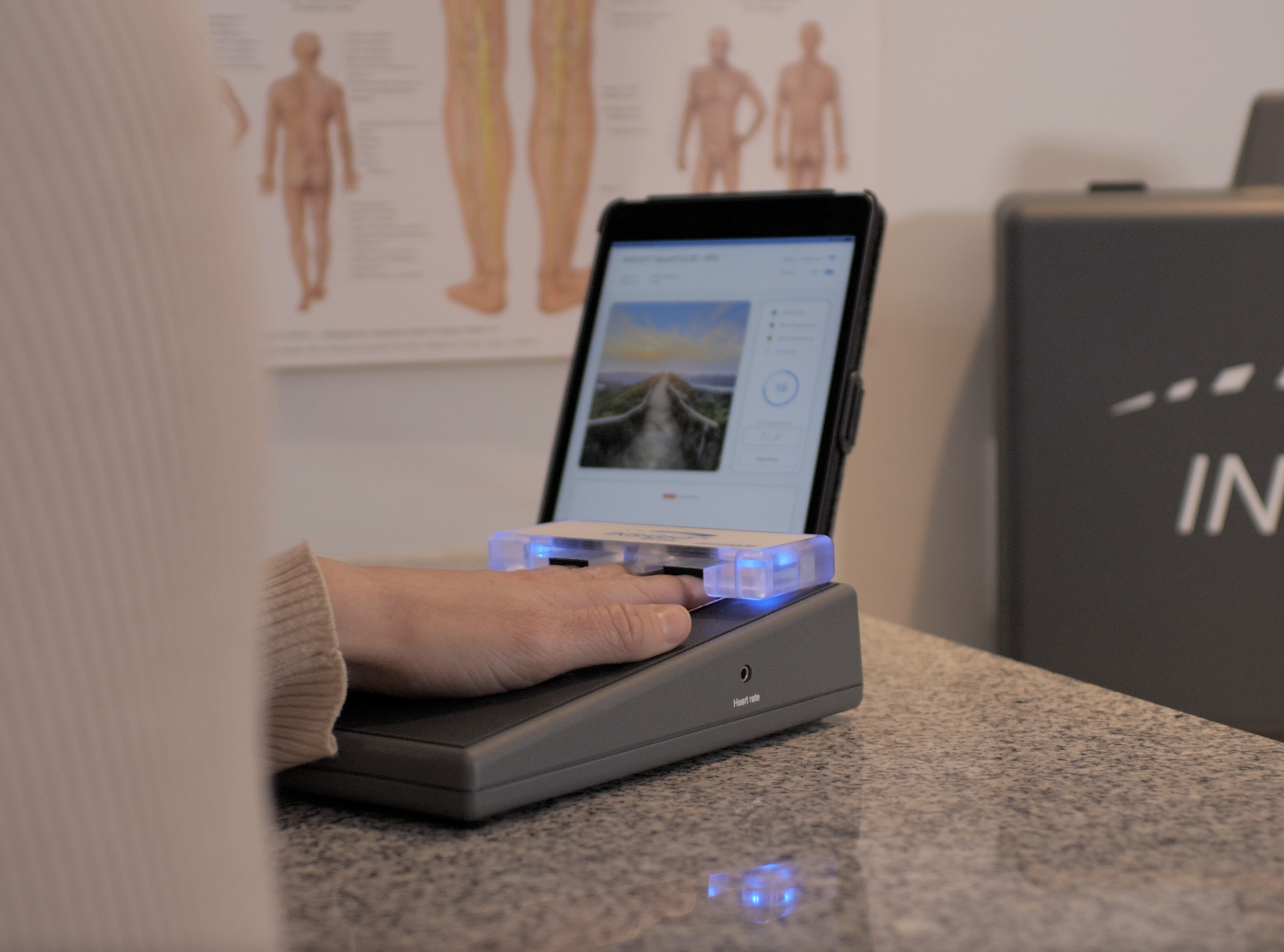
This is why INSiGHT scanning technologies were designed as a system rather than a single metric. Within the INSiGHT neuroPULSE, electrodermal activity is used to support stable data collection during heart rate variability assessment. The GSR sensor helps confirm that the body is not in excessive arousal during measurement, protecting the integrity of the data rather than labeling emotions.
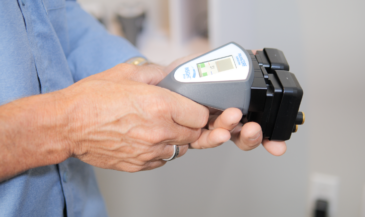
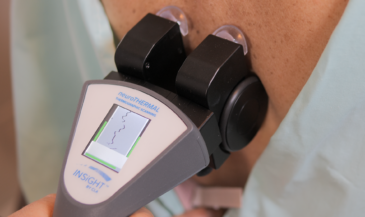
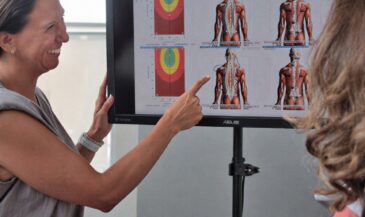
From there, neurological scanning expands. neuroPULSE evaluates adaptability and autonomic reserve. neuroTHERMAL evaluates segmental stress patterns through temperature asymmetry. neuroCORE sEMG evaluates motor tone and energy output. Together, these technologies provide objective exam data that chiropractors interpret to design care plans. INSiGHT does not create care plans. It provides measurable information that supports clinical judgment, backed by published research and decades of application.
In this role, electrodermal activity complements neurological scanning without overstating its importance. It reinforces the principle that the nervous system is measurable, adaptive, and central to long-term performance.
Learn more about INSiGHT scanning?
Fill this out and we’ll get in touch!
"*" indicates required fields
Seeing the Nervous System, Not Guessing at It
The real value of a galvanic skin response sensor is not novelty. It is honesty. It shows that physiological arousal is happening whether the patient notices it or not. It reinforces that the nervous system is constantly responding to stimulation and load.
For chiropractors, this aligns perfectly with a neurological focus. When patients can see measurable changes, conversations shift. Stress becomes tangible. Adaptation becomes visible. Care becomes purposeful. Objective signals, used responsibly, build understanding rather than confusion.
When electrodermal activity is integrated into neurological scanning and interpreted through chiropractic expertise, it serves its highest purpose. It supports clarity. It supports trust. And it helps patients finally see what their body has been communicating all along.