

That gap is often neuromuscular efficiency, the hidden difference between simply being strong and being able to use strength on demand. In practice, neuromuscular efficiency shows up as steadiness, timing, and control, especially when speed, load, or fatigue enters the picture. It is why a squat can look clean at warm-up and then unravel when the weight gets real.
For chiropractors, understanding neuromuscular efficiency is not a fitness trend. It is a practical way to explain why certain movement patterns break down, why some patients plateau in strength training, and why injury prevention is often about coordination before it is about capacity. When you anchor this conversation in neurological scanning, you shift the visit from opinion to clarity.
Neuromuscular Efficiency Through a Chiropractic Lens
Understanding neuromuscular efficiency starts with a definition that matches what we see every day in chiropractic. Neuromuscular efficiency refers to the ability of the nervous system and muscles to work together to coordinate agonists, antagonists, and stabilizers so a person can produce force, reduce force, and stabilize force across all movement planes. In other words, efficiency refers to the ability to express movement with less wasted effort and more control.
When neuromuscular efficiency is high, movement tends to look cleaner and feel easier. The patient can recruit and activate the right tissues without turning everything on at once. When neuromuscular efficiency is low, the body often compensates with extra postural tension, delayed timing, or poor stabilization. The rep still happens, but it costs more energy and creates more room for breakdown, especially in complex movements.
This is why neuromuscular efficiency plays such a big role in chiropractic conversations about physical performance. Patients do not walk into your office asking for “better motor control.” They walk in saying they feel unstable, tight, inconsistent, or stuck. Those are often traits of a system that has not refined its recruitment strategy. A chiropractor can help the patient connect the dots between their nervous system performance, their movement efficiency, and their results in the gym or on the field.
Here is a helpful clinical translation: nme means the nervous system can organize movement with better timing and coordination so the body can generate force without wasting motion or relying on compensation. It is not just about output. It is about efficient movement.
- In practice, neuromuscular efficiency often explains why two people with similar strength show very different control under load.
- For patients, neuromuscular efficiency is why the same movement can feel smooth one day and awkward the next.
- For chiropractors, understanding neuromuscular efficiency creates better communication about progress and injury prevention.
The Neuromuscular System Behind Efficiency
Neuromuscular efficiency is a communication story, not a muscle story. The neuromuscular system is the loop between brain, spinal cord, nerves, and muscle tissue. Muscles respond to input. The nervous system provides the timing, sequencing, and intensity. When that communication is clean, the body moves with less waste. When it is noisy, the body adds tension to create stability it cannot coordinate.
A big piece of this is motor units. A motor unit is a motor neuron and the muscle fiber it controls. Your ability of the nervous system to recruit the right number and type of motor units for the task is a major driver of strength and power. This is also where the phrase nervous system to effectively recruit becomes real. The body has to select the right tissues, in the right order, at the right time, then repeat that under increasing demand. That is why the central nervous system, and specifically central nervous drive, matters for force production.
Another key piece is rate coding, the firing frequency that influences contraction speed and intensity. Higher firing rates can support quicker and stronger contractions, which matters for explosiveness and power output. Put simply, the better the ability to activate the nervous system, the more efficiently the body can express what it already has. This is why you often see improvements in muscular strength before you see obvious size changes. The system learns to recruit and activate what is already there.
Finally, coordination decides whether that output is usable. Neuromuscular coordination includes inter-muscular coordination, how multiple muscle groups cooperate, and intra-muscular coordination, how fibers within one muscle synchronize. A patient with high NME often looks steady and precise under load and speed. A patient with low NME often looks like they are fighting their own stabilization strategy, especially when fatigue rises. That difference matters for sports performance and it matters for everyday function.
Learn more about INSiGHT scanning?
Fill this out and we’ll get in touch!
"*" indicates required fields
Why Neuromuscular Efficiency Matters in Practice
In the clinic, neuromuscular efficiency shows up long before a patient experiences a dramatic setback. Performance usually leaks first. The athlete who feels “off” on the first rep. The runner whose form falls apart late in a race. The lifter who can hit the weight but cannot repeat it cleanly. Those are often training outcomes that point to coordination, not just conditioning.
Neuromuscular efficiency is a quiet driver of athletic performance and overall performance. When recruitment is efficient, the patient can produce force with less wasted effort. The movement feels smoother. The system spends less energy stabilizing and more energy expressing the action. This is why neuromuscular efficiency is tied to better results in both sports performance and daily physical performance. It is also why improving athletic performance often begins with improving movement efficiency.
There is also a fatigue and endurance angle. Endurance is not only about the heart. It is also about movement efficiency. When a body wastes effort through poor sequencing or excessive co-contraction, it fatigues sooner. When neuromuscular efficiency is higher, the system can execute required movement patterns with less energy loss, which matters during long training blocks and high-volume phases of different training.
Now the clinical headline: injury prevention. Injuries rarely happen when everything is perfect. They happen when timing is late, stabilization is missing, or fatigue changes the strategy. That is why neuromuscular training reduces injury, because it improves stabilization and control so the athlete is less likely to end up in a compromised position. This is a core concept in sports medicine and it directly connects to reduce injury risk. If a patient moves more efficiently and with greater precision, they reduce injury exposure during cutting, landing, lifting, or decelerating. Over time, that reduces the risk of setbacks and lowers risk of injury.
- Neuromuscular efficiency supports performance outcomes by improving timing, precision, and force production.
- Neuromuscular efficiency supports injury prevention by improving stabilization and coordination under fatigue.
- Neuromuscular efficiency helps enabling athletes to train consistently without constantly riding the edge of breakdown.
Building Neuromuscular Efficiency With Training Methods Chiropractors Should Understand
Chiropractors do not need to run the gym floor, but we do need to understand the training language our patients live in. Patients are already following training methods, experimenting with training strategies, and stacking intensity without always understanding training responses. If you can explain neuromuscular efficiency in plain language, you become more relevant, safer, and more effective at guiding decisions that reduce injury while supporting progress.
Specificity is the first principle. A sprinter needs speed and explosiveness, so the strategy is not the same as the patient building a bigger squat. The goal dictates the training prescription. This is why movement patterns and skill acquisition matter. Exercises are skills. Repetition helps refine timing and coordination. Some coaches call this “greasing the groove,” but the main point is that practice improves the nervous system to effectively recruit tissues for the task. This is also why slow-tempo work can help a patient refine control early, before intensity rises.
Next comes intensity. Heavy resistance work near a true 1rm can improve recruitment and drive neuromuscular adaptations. Lighter loads moved fast can build power training qualities by teaching the system to generate force rapidly. In strength and conditioning, you often see both: heavy sets to build force production and faster sets to train power output. This is where progressive overload matters. It is not just adding weight. It is building capacity while keeping control. A common example is the squat. A patient can “own” a squat at low load, but lose organization during a back squat when demand increases. That is a neuromuscular efficiency conversation, not a motivation conversation.
Then there is plyometric work. Plyometrics, plyometric training, and plyometric exercises can enhance performance by improving rapid force expression and teaching the body to absorb and re-express force. Done well, plyometric improves the ability to perform quick transitions and stabilize under impact. Done poorly, plyometric can raise risk of injury. This is where advanced training methods like French Contrast Training show up. French Contrast Training stacks heavy resistance with explosive efforts, often pairing a heavy lift with a jump sequence to drive recruitment and coordination. For recreational athletes and fitness enthusiasts, the idea can be scaled with simpler drills and safer volumes based on fitness levels.
- Strength training near 1rm supports recruitment and improvements in muscular strength.
- Fast efforts support power output and the ability to generate force quickly.
- Plyometric work supports explosiveness when stability and timing are ready.
- Progressive overload should be paired with control so the goal is better results, not just harder sessions.
Scan-Informed Neuromuscular Efficiency in Chiropractic With INSiGHT Scanning Technology
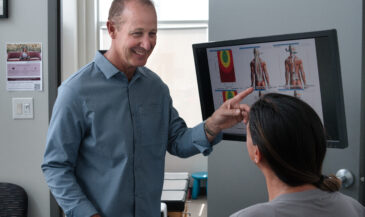
If neuromuscular efficiency matters this much, the obvious next question is how to evaluate it objectively and track training outcomes over time. Watching movement is valuable, but movement can look “fine” until speed, load, or fatigue exposes the real strategy. That is where neurological scanning belongs in a modern chiropractic office. It gives you a baseline, supports clinical interpretation, and turns the conversation from guesswork into clarity.
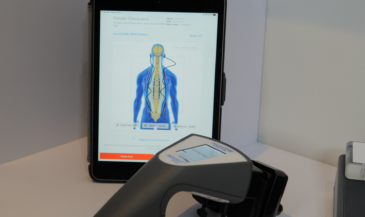
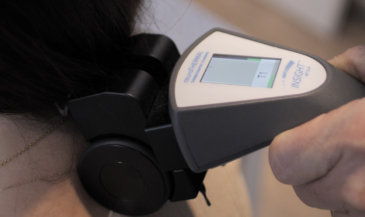
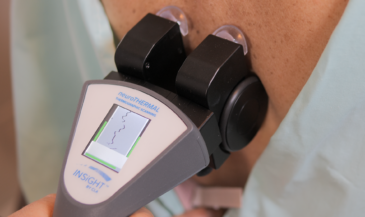
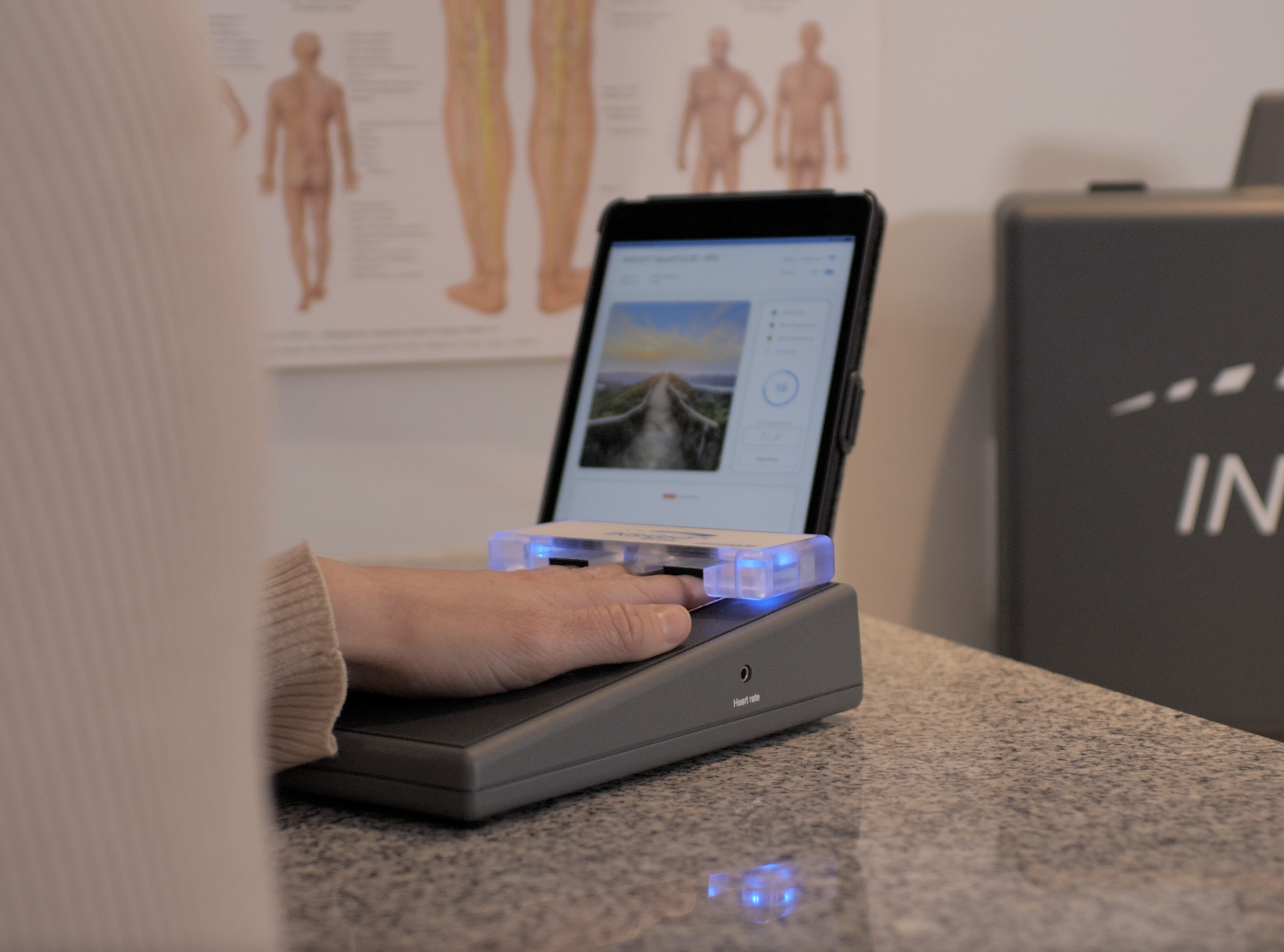
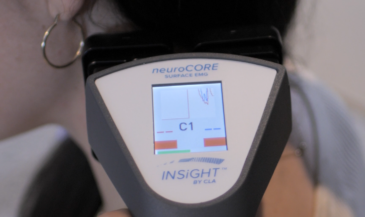
This is where surface EMG and surface electromyography enter the discussion. Electromyography is often referenced as a way to evaluate muscle activity and recruitment, but it is not always accessible in training settings. In chiropractic, it can be part of objective evaluation when used appropriately. The neuroCORE sEMG, part of INSiGHT scanning technology, supports objective exam data related to neuromuscular function and how multiple muscle groups are behaving within the broader neuromuscular system. This is not about replacing a coach or personal training. It is about giving the chiropractor something objective to interpret so the patient understands what is happening and why your recommendations make sense.
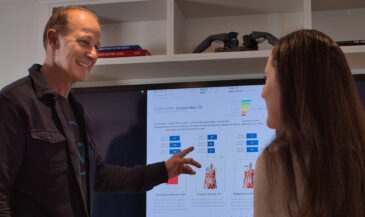
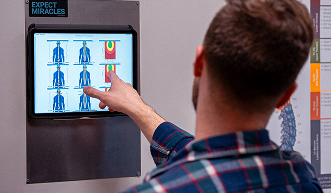
Just as important, INSiGHT scanning technology does not generate care plans. It generates objective exam data and scan reports. The chiropractor interprets the findings and uses them, alongside clinical judgment, to design the care plan and guide recommendations. That distinction matters, because the power of scanning is not in a single number. It is in trend-based communication and smarter decisions. neuroCORE sEMG supports recruitment and coordination conversations. neuroTHERMAL supports segmental stress trends that often accompany sympathetic overdrive. neuroPULSE supports discussions of adaptability and recovery, including how a system handles training load and endurance demands. When you bring the nervous system into the conversation with objective findings, you create a shared reference point that improves understanding neuromuscular efficiency and supports strategies to enhance outcomes.
- Scanning supports training based decisions by grounding the conversation in objective exam data.
- Scanning supports injury prevention by helping patients see what needs attention before breakdown shows up as a setback.
- Scanning supports collaboration with a personal trainer or certified personal trainer because everyone can work from the same objective reference.
When Efficiency Becomes a Practice Advantage
Neuromuscular efficiency is not a gym buzzword. It is a practical explanation for why training responses vary, why complex movements break down under demand, and why the same athlete can feel sharp one week and inconsistent the next. It explains why strength and power are not just about capacity, but about organization. It also explains why the ability of the nervous system, and specifically the nervous system to effectively recruit, matters as much as muscle tissue when performance outcomes are the goal.
When you help a patient improve neuromuscular efficiency, you are helping them move with less waste and more control. That supports physical performance, helps them produce force more consistently, and can reduce injury exposure over time. In the chiropractic setting, the win is not only that the patient feels better. The win is that they can train, compete, and live with more stability and confidence. That is a care plan conversation patients understand.
And this is where the INSiGHT narrative fits perfectly. When you can show objective findings, interpret them clearly, and then re-scan to track trends, you stop relying on opinions to prove progress. You create clarity. You create consistency. You create a more compelling reason for follow-through. Neuromuscular efficiency by enhancing recruitment, coordination, and control becomes a measurable story, and that is exactly what keeps patients engaged in care and committed to the process.