
Every step they take, every shift in posture, every change in temperature, every touch against the skin, and every movement through the spinal region creates sensory information. A receptor detects a stimulus, a sensory neuron begins transmitting that information, and a nerve pathway carries it toward the spinal cord and brain. Much of that activity never becomes a conscious sensation, yet the nervous system is constantly using incoming information to understand the body and organize what happens next.
That is what makes the sensory nervous system such an important conversation for chiropractors. Most patients think of the sensory system as vision, hearing, smell, taste, and touch. Those senses certainly matter, but they are only part of the story. The body is also sensing pressure, vibration, temperature, movement, stretch, and position. For a Neurologically-Focused Chiropractor, that opens a much bigger conversation about sensory input, motor function, spinal communication, and nervous system performance.
What Is the Sensory Nervous System and What Does the Sensory System Do?
The sensory nervous system is the part of the nervous system responsible for processing information gathered from the body and the environment. In simple terms, the system receives a stimulus, detects it through an appropriate receptor, and begins transmitting that information toward the central nervous system. From there, the brain and spinal cord can interpret, relay, or respond to what has been detected.
Some sensory information becomes something we consciously recognize. You feel the warmth of a coffee mug. You hear somebody call your name. You know that your right foot is touching the floor. Other sensory input is handled without demanding your conscious attention. That distinction matters because sensory perception is only one part of what this system is doing at any given moment.
At the cellular level, the neuron makes this communication possible. A sensory receptor responds to a particular form of stimulus. An ion channel within the receptor membrane may participate in converting that stimulus into an electrical event. If the signal reaches the appropriate threshold, an action potential travels along the neuron. The neuron’s axon then carries that electrical signal toward its ending, where communication can continue across a synapse. A neurotransmitter can help relay the message to the next neuron in the pathway.
The Sensory System Starts With a Stimulus and a Receptor
Different sensory receptors specialize in different jobs. The nervous system does not use one generic receptor to detect everything from light to temperature. Instead, different sensory structures respond to particular forms of energy or change.
- Mechanoreceptors: Detect touch, pressure, vibration, movement, and mechanical deformation. These receptors are especially relevant when discussing proprioception and spinal movement.
- Thermoreceptors: Respond to hot and cold and contribute to temperature sensation.
- Nociceptors: Detect potentially damaging sensory stimuli and contribute to protective signaling.
- Chemoreceptors: Respond to chemicals and contribute to functions such as taste and smell.
- Photoreceptors: Detect light and provide the receptor foundation for the visual system.
These different sensory receptors give the nervous system specific pieces of information. One receptor does not independently decide what an experience means. It contributes to a much larger network of neurons that must transmit information, integrate it, and create an appropriate response.
General Sensation and Specialized Sensory Organs
The sensory system is often discussed in terms of general and specialized sensory function. Sensory organs support vision, hearing, taste, smell, and balance. Information moves from those sensory organs to the CNS through specialized neural pathways, including connections involving a cranial nerve or cranial sensory structures.
General somatic sensory function includes touch, pressure, vibration, temperature, and body position. Receptors in the skin contribute sensory information from the skin and support the sense of touch. Other receptors associated with muscles, joints, and connective tissues provide information about movement and position.
For chiropractors, this is the important point: the role of sensory function extends far beyond the familiar five senses. The sensory nervous system is continually gathering information about the rest of the body and helping the brain determine where that body is and what it is doing.
How Peripheral Sensory Nerves Transmit Information to the Spinal Cord and Cortex
Detecting a stimulus is only the beginning. Once a receptor responds, the information has to travel through an organized sensory pathway before the nervous system can make meaningful use of it.
The peripheral nervous system provides much of the communication network connecting the rest of the body with the central nervous system. A peripheral sensory nerve generally carries afferent information inward, while a motor nerve carries commands outward. That gives us a useful starting point: sensory information comes in, processing occurs, and motor information goes out.
In real life, however, that process is continuous. Every motor response creates new sensory stimuli, which means the sensory nervous system is always updating the central nervous system about what happened after the last response.
Peripheral Sensory Neurons Carry Information Inward
The peripheral sensory nervous system extends through the body in an enormous branching network. Spinal nerves connect the spinal cord with much of the body, while cranial nerves serve important sensory and motor roles in the head and neck. A cranial nerve may carry sensory information, motor information, or both depending on the nerve involved.
Many peripheral nerves contain both sensory and motor fibers. Sensory nerve fibers carry information toward the CNS, while motor fibers carry commands toward skeletal muscle. This organization allows sensory and motor information to move in opposite directions while remaining part of one coordinated neurological system.
A sensory neuron is built for communication. Its cell body supports the neuron, while the axon carries the action potential over distance. Many axons are wrapped in myelin, which helps signals move efficiently. At the axon ending, the neuron may communicate across a synapse with another neuron.
Sensory fibers can terminate in specialized nerve endings throughout the body. Cutaneous nerve endings and other receptors in the skin gather information about touch, temperature, and pressure, while deeper receptors provide information from muscles and joints.
Dorsal Root Ganglia, the Spinal Cord, and the Sensory Pathway
For many neurons serving the body, sensory neurons are located with their cell bodies in the dorsal root ganglia. A dorsal root ganglion sits just outside the spinal cord and contains the cell bodies of sensory neurons carrying peripheral information inward.
Those sensory fibers enter the spinal cord through dorsal regions, where information may participate in local processing or continue along an ascending pathway. Within the spinal cord, networks of neurons in gray matter can receive sensory input and help organize reflex or relay activity. Other fibers ascend toward higher centers.
Depending on the sensation involved, sensory information may travel through different pathways before reaching the brain. Information related to touch, vibration, temperature, or body position does not necessarily follow one identical route. Eventually, some information reaches regions of the cortex involved in conscious sensation.
The somatosensory cortex is particularly important for interpreting where a sensory stimulus occurred and what that stimulus represents. That does not mean every signal entering the spinal cord has to reach the cortex. A tremendous amount of neurological processing happens below conscious awareness.
Not Every Sensory Signal Becomes a Conscious Sensation
This is where the sensory nervous system becomes especially interesting from a chiropractic perspective.
Your patient does not consciously monitor every receptor firing in their body. They do not think about the exact position of every joint before standing, walking, or reaching for a coffee cup. Sensory information can contribute to reflexes, posture, movement, balance, and coordination without becoming a conscious sensation.
That is why how a patient feels matters, but it cannot tell us everything about nervous system performance. Conscious sensation is only one window into an enormous amount of sensory processing happening underneath it.
Learn more about INSiGHT scanning?
Fill this out and we’ll get in touch!
"*" indicates required fields
Why the Somatosensory Nervous System Matters in Chiropractic
The somatosensory nervous system brings this discussion directly into the chiropractic office. The somatosensory system gathers information associated with touch, pressure, temperature, movement, and body position. That means chiropractors work around sensory-rich structures all day long.
The spinal region, muscles, joints, skin, and surrounding tissues continuously generate information that reaches the brain and spinal cord. The central nervous system uses that information as part of the process of coordinating movement and motor function. In other words, the spine is not simply a structural column. It exists in the middle of a constant sensory and motor conversation.
This is also where structure and function belong in the same conversation. Structure matters, but the deeper neurological question is what the nervous system is receiving from that structure and how it is responding.
Proprioception Is the Sensation Patients Rarely Think About
Proprioception is one of the clearest examples of why sensory function matters to chiropractors. Close your eyes and bend your elbow. You do not need to see your arm to have a reasonable sense of where it is. The nervous system receives sensory information about movement and body position that allows you to maintain an internal map of yourself in space.
Mechanoreceptors associated with muscles, joints, and surrounding tissues contribute to that process by responding to movement, stretch, pressure, and mechanical change. This sensory innervation gives the brain continuous information about what the body is doing.
Your patient does not have to consciously calculate where every joint is before taking a step. Their sensory system is already providing that information.
Sensory and Motor Neurons Work as a Continuous Loop
We often separate sensory and motor neurons when teaching anatomy because it makes the nervous system easier to learn. A sensory neuron brings information inward. A motor neuron sends information outward.
The living nervous system does not experience these as two unrelated chapters. Sensory and motor neurons participate in one ongoing loop:
- Sensory input: A receptor detects information about the body or surrounding environment.
- Central processing: Neurons within the brain and spinal cord process and integrate that information.
- Motor output: Motor pathways send instructions toward skeletal muscle.
- Movement: The body responds and its position fluctuates.
- New sensory information: That movement immediately creates another round of sensory input.
This is why sensory and motor function cannot be completely separated in a real person. The nervous system responsible for processing sensory input is continuously comparing incoming information with the motor response that follows.
Where Chiropractic Enters the Sensory Nervous System Conversation
This gives chiropractic a much better story than simply saying something is out of place.
A Neurologically-Focused Chiropractor is interested in how spinal function relates to nervous system performance. We are looking at sensory and motor information, postural tension, compensation, neurological interference, adaptability, and how the patient’s system responds over time.
That does not mean every change in sensory function comes from vertebral subluxation. It also does not mean chiropractic adjustments are the answer to every peripheral sensory condition. Persistent numbness, progressive weakness, significant loss of sensation, altered reflexes, or other neurological findings can require appropriate medical evaluation and referral. Sensory nerve problems may arise from trauma, compression, metabolic conditions, infection, toxins, medication effects, autoimmune conditions, or other causes.
Visceral sensory neurons also carry information associated with an internal organ, and that gives us another reminder that sensory physiology is broader than what happens in the skin or joints. Somatic sensory pathways, visceral pathways, motor pathways, and the autonomic nervous system are distinct but interconnected parts of neurological function.
Good chiropractic does not become smaller when we respect those distinctions. It becomes more precise.
How INSiGHT Scanning Technology Makes Nervous System Performance Visible
The sensory nervous system does not operate in isolation. Somatic sensory input, motor output, and autonomic regulation interact as parts of a larger neurological picture. That is where objective neurological scanning becomes particularly useful for chiropractors.
INSiGHT scanning technology does not diagnose a sensory nerve condition and it is not a nerve conduction study. Instead, INSiGHT neuroTECH and Synapse software provide objective exam data and scan views that help the chiropractor analyze several functional expressions of nervous system performance alongside the history and examination.
That distinction matters. The goal is not to claim that one scan tells us everything about a receptor, neuron, sensory pathway, or organ function. The goal is to give the chiropractor objective neurological information that helps move the conversation beyond symptoms alone.
neuroCORE Shows the Motor Side of the Sensory-Motor Conversation
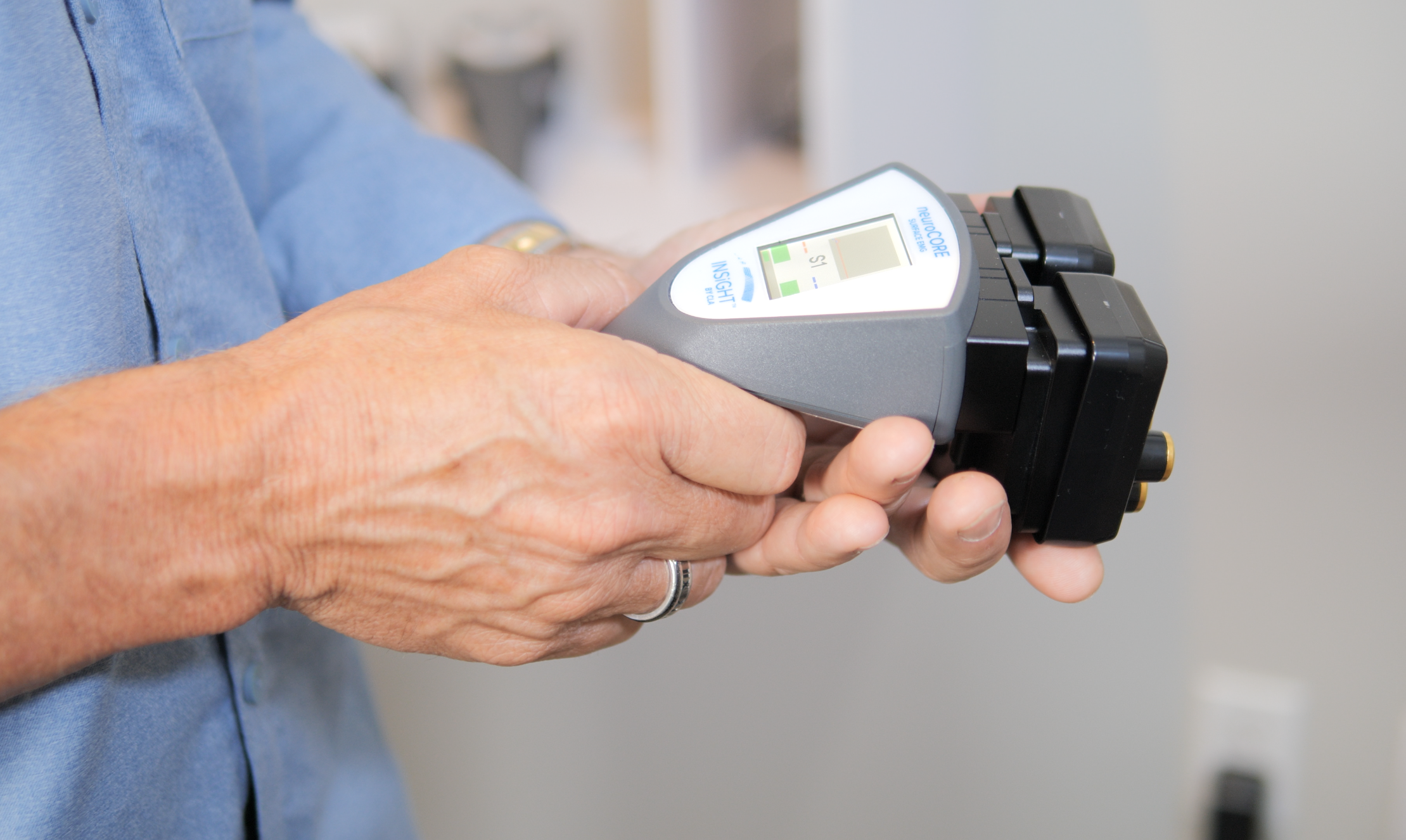
The neuroCORE uses surface electromyography, or sEMG, to analyze electrical activity in the paraspinal muscles. It helps the chiropractor evaluate postural tension, symmetry, motor tone reactions, compensation, and energy expenditure.
This fits naturally with the sensory and motor loop. The sensory system receives information. The central nervous system processes it. Motor pathways organize output. neuroCORE does not directly analyze a sensory receptor or peripheral sensory neuron, but it gives the chiropractor a functional view of part of the motor expression of that larger neurological process.
That is far more useful than simply telling a patient that a muscle feels tight. Objective analysis helps show how the motor system is behaving and where patterns may be needing attention.
neuroTHERMAL Adds an Autonomic View
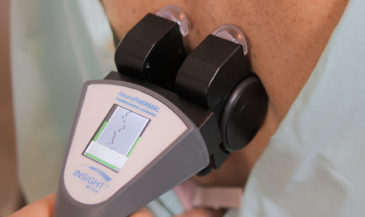
The neuroTHERMAL adds another dimension by analyzing paraspinal skin temperature patterns associated with autonomic regulation. The autonomic nervous system influences blood flow and vessel tone, both of which affect skin temperature.
With neuroTHERMAL, the chiropractor can perform a full spine nerve system scan quickly and follow autonomic patterns along spinal regions. Rolling and segmental modes also allow doctors to observe how those patterns fluctuate across examinations or around an adjustment.
This is where sensory and autonomic function need to remain distinct. neuroTHERMAL is not testing the patient’s sense of temperature. It is analyzing a physiological pattern related to autonomic regulation.
neuroPULSE Looks at Adaptability and Reserve
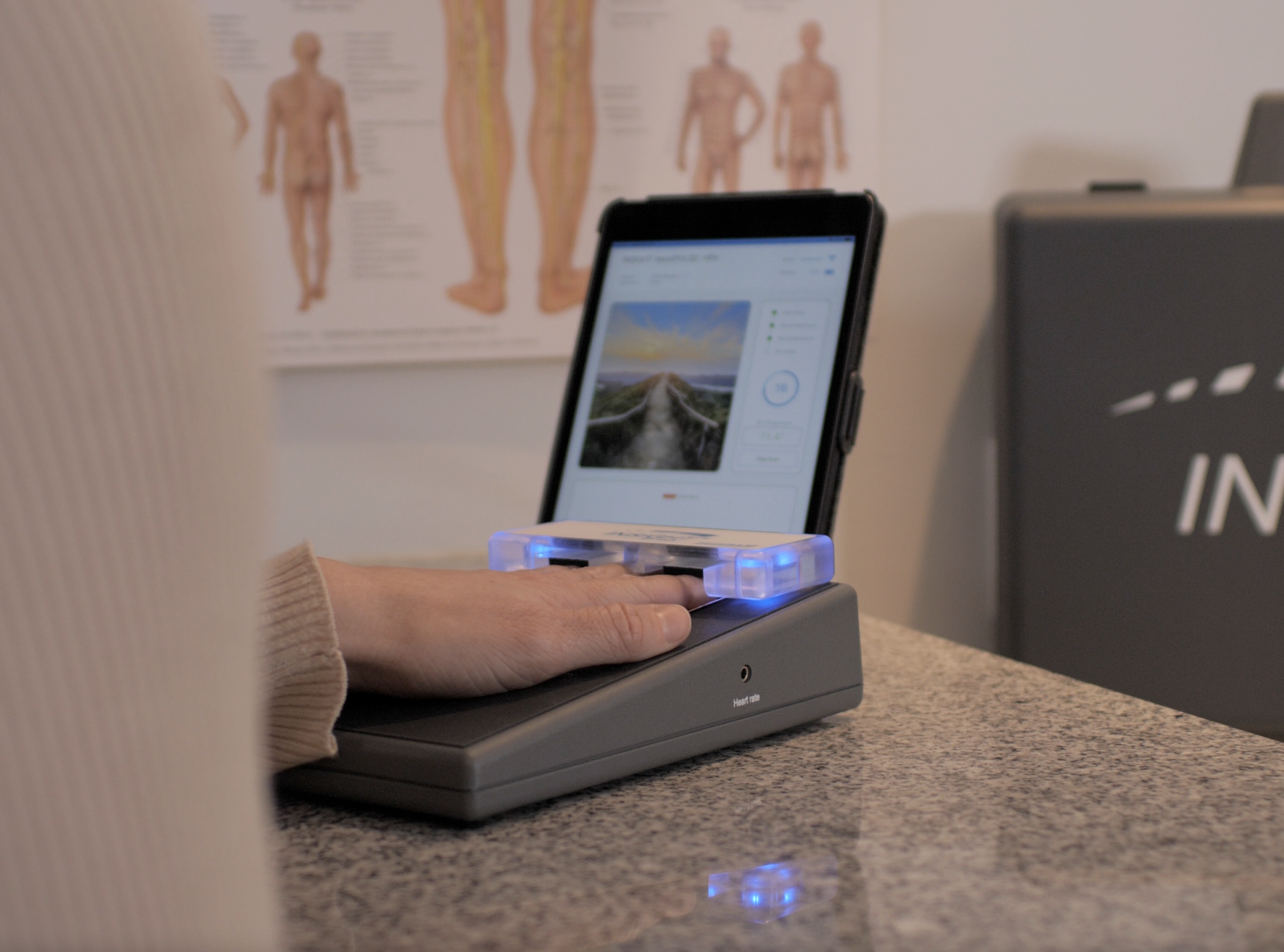
The neuroPULSE analyzes Heart Rate Variability, giving the chiropractor another view into autonomic balance, adaptability, reserve, and recovery. The sympathetic nervous system and parasympathetic influences contribute to the changing beat-to-beat rhythm that HRV analyzes.
Why include autonomic analysis in a sensory nervous system conversation? Because receiving information is only half of neurological performance. The system must respond to what it receives and adapt appropriately to changing demands.
A patient may say, “I feel fine.” That is useful information. But another worthwhile question is, “How well is this nervous system adapting?”
Synapse Helps Patients See the Bigger Neurological Story
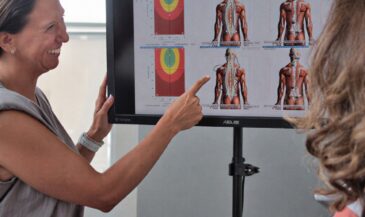
INSiGHT neuroTECH and Synapse software bring these different dimensions into patient-friendly scan views and reports. neuroCORE helps show motor output and energy demand. neuroTHERMAL adds autonomic pattern analysis. neuroPULSE contributes information about reserve and adaptability. CORESCORE can then simplify several findings into an understandable neurological efficiency score.
The first exam gives you a baseline. Progress scans provide comparison. Over time, you can begin looking at response and trajectory rather than relying only on how the patient remembers feeling weeks earlier.
The technology does not create the care plan. The chiropractor interprets the findings, combines them with history and examination, and builds the care plan from the complete clinical picture.
That is where neurological scanning earns its place. It does not replace your hands, your adjustment, or your judgment. It helps make nervous system status easier to analyze and easier for patients to understand.
The Sensory Nervous System Gives Chiropractic a Bigger Neurological Story
The sensory nervous system reminds us of something beautifully simple: the brain cannot respond to information it never receives.
Receptors detect sensory stimuli. A sensory neuron converts and carries the signal. A nerve fiber and axon transmit it toward the spinal cord or brain. A ganglion may house the cell bodies involved in that peripheral pathway. Other neurons relay the information. Some signals reach the cortex and become conscious sensation. Other information contributes to movement, balance, reflexes, posture, and coordination without ever asking for conscious attention.
That is why the sensory nervous system matters so much to the chiropractic profession. The system receives information about touch, pressure, temperature, movement, and position. Sensory and motor pathways then participate in a continual neurological exchange. The patient senses, processes, responds, moves, and immediately produces new sensory information.
Move the Patient From Sensation to Performance
Patients naturally begin with sensation. They tell you what feels better, what feels different, what is stiff, or what they no longer notice. Those observations matter and deserve to be heard.
But sensation is not the entirety of the neurological story.
The better question is not simply, “What do you feel today?” It is, “How well is your nervous system receiving information, organizing a response, and adapting?”
That is where Neurologically-Focused Chiropractic Care has such a meaningful role. We can respect symptoms without making them the only scoreboard. We can evaluate the spinal region without reducing chiropractic to structure alone. And we can use objective neurological scanning to give patients a shared reference point for understanding nervous system performance.
When INSiGHT scanning technology makes motor patterns, autonomic regulation, and adaptability easier to see, patients begin to understand that their nervous system is doing much more than producing symptoms. It is continuously sensing, processing, responding, and adapting.
Once patients understand that neurological why behind their care, they stop thinking only about individual sensations and begin seeing the bigger story of nervous system performance. That is a much stronger chiropractic conversation.