
That two-way conversation is the work of the somatic nervous system, an important part of the peripheral nervous system. It is often called the voluntary nervous system because it helps control voluntary movement. But that definition sells it short. The somatic nervous system also carries sensory information, contributes to posture and body awareness, and participates in reflex activity that can occur without conscious control.
For chiropractors, this matters. We work with people whose spinal regions, muscles, joints, peripheral nerves, spinal cord, and brain are communicating every second of the day. Once you look at that relationship through a neurological lens, the conversation gets much bigger than bones and joints. You begin asking a better question: What sensory information is the CNS receiving, and what kind of motor output is the body producing?
What Is the Somatic Nervous System?
The somatic nervous system is part of the peripheral nervous system, the network of nerves that connects the central nervous system with the rest of the body. The central nervous system includes the brain and spinal cord. The peripheral nervous system carries information between the CNS and structures throughout the body.
If you remember one thing from neuroanatomy, make it this: the somatic system is a two-way street. Information travels in, and instructions travel out. That basic sensory and motor relationship allows a person to feel what is happening around them, understand where the body is positioned, and create purposeful movement.
Sensory Input Travels Toward the CNS
On the incoming side are afferent nerves. A sensory neuron receives information through sensory receptors and carries that information toward the CNS. This is the afferent side of the somatic nervous system.
Think about everything the nervous system needs to know just to move through an ordinary day. Receptors in the skin respond to external sensory information. Other receptors associated with muscles and joints provide information related to movement and body position. A sensory nerve carries signals centrally so the nervous system can maintain an updated picture of the body and its surroundings.
A stimulus begins the process. That information travels along the axon of a neuron toward the spinal cord and higher neurological centers, where it can contribute to perception and an appropriate response.
For chiropractors, this incoming side deserves attention because movement does not begin with muscle alone. The CNS depends on sensory input to understand where the body is and what it is doing.
Motor Output Travels Back Toward Skeletal Muscle
The other half of the conversation is motor output. Once information has been processed, the nervous system has to produce an appropriate response.
The basic motor pathway begins in the CNS and ends at skeletal muscle. For voluntary movement, areas including the primary motor cortex contribute to the generation of motor commands. Those signals descend toward the spinal cord, where the final somatic motor pathway involves a motor neuron associated with the ventral horn, or anterior horn of the spinal cord.
The axon of that motor neuron then travels outward through the peripheral nervous system toward muscle. At the neuromuscular junction, the neuron communicates with the muscle using a neurotransmitter. In this pathway, acetylcholine contributes to the events that lead to muscle contraction.
That is the neurological story underneath something as ordinary as lifting a cup, turning the head, or taking a step. The muscle performs the movement, but the nervous system organizes it.
Cranial Nerve and Spinal Nerve Pathways Carry the Conversation
The nerves associated with the somatic nervous system can also be considered by where they originate. There are 12 pairs of cranial nerves associated with important sensory and motor functions. A cranial nerve may carry sensory information, motor commands, or both depending on the particular nerve.
These nerves connect with the brain and brain stem and contribute to sensation and movements involving areas such as the face, eyes, tongue, head and neck.
Then we have 31 pairs of spinal nerves. These nerves carry sensory information from the periphery toward the spinal cord and motor commands outward toward the body. A spinal nerve connects to the spinal cord through a nerve root, creating an important link between the central and peripheral portions of the nervous system.
For the chiropractor, the important point is not memorizing every somatic nerve pathway. It is recognizing how much information moves through this network all day long.
Sensory Input, Motor Output, and the Somatic Nervous System Reflex
Calling the somatic nervous system the voluntary nervous system is useful, but it can leave the impression that everything it does requires conscious thought. That is not the case.
The somatic nervous system also participates in reflexes. These responses remind us that motor and sensory communication can be organized remarkably quickly without waiting for someone to consciously decide what to do. The body receives information, processes it through a neural pathway, and produces a response.
For chiropractors, that reinforces an important principle: what we see happening at a muscle can be the end result of neurological processing upstream.
How a Reflex Arc Works
The familiar knee reflex is a good example. Tap the patellar tendon below the kneecap with a reflex hammer and a rapid response follows. A sensory receptor responds to the stimulus, and a sensory neuron carries an afferent signal toward the spinal cord. The reflex pathway generates a motor response, and the quadriceps contracts to produce the familiar kick.
That neural pathway is known as a reflex arc. In simplified form, it works like this:
- Reception: A sensory receptor detects a stimulus.
- Afferent input: A sensory neuron carries electrical signals toward the spinal cord.
- Integration: The spinal cord participates in processing the information.
- Motor response: A motor neuron carries the command outward.
- Contraction: The appropriate muscle produces the rapid reflex response.
The brain can still receive information about what happened, but the immediate reflex does not have to wait for the cortex to consciously process the event before the response begins.
So even within a system associated with voluntary movement, we find rapid automatic responses. That is why it is more useful to think about sensory input, neurological integration, and motor function than to divide every response neatly into voluntary and involuntary categories.
The Spine Is Part of a Constant Sensory-Motor Conversation
Here is where this becomes especially interesting for chiropractors. Muscles and joints contain receptors that continually provide information related to movement and body position. That information is carried centrally, where the nervous system uses incoming signals as part of the process of organizing posture and movement.
This gives us a richer way to think about the spine. We should be careful not to claim that every restricted spinal region automatically creates a specific neurological condition. But spinal movement and afferent information are relevant to sensorimotor processing, which makes them an important part of the neurological picture chiropractors evaluate.
Instead of asking only, “How does this spinal region move?” we can also ask, “What information is entering the nervous system, and what motor pattern is being expressed?”
Now we are talking about the somatic nervous system in a way that connects anatomy to a real chiropractic examination.
Learn more about INSiGHT scanning?
Fill this out and we’ll get in touch!
"*" indicates required fields
Why the Somatic Nervous System Matters in Chiropractic
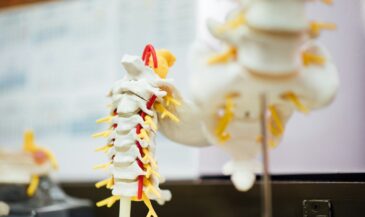
Chiropractic gets unnecessarily small when we reduce the whole story to spinal structure. Structure matters, of course. But you and I both know we are working with a living person, not a model spine sitting on the corner of the desk.
That person is receiving sensory information, integrating it through the CNS, generating motor commands, maintaining posture, and adapting to changing demands all day long. That is why the somatic nervous system belongs squarely in the chiropractic conversation. It gives us a neurological framework for thinking about movement, sensory feedback, postural tone, and the motor patterns we see every day.
Spinal Motion and Sensory Feedback
Sensory receptors associated with muscles and joints continually tell the nervous system about movement and body position. This information contributes to the CNS’s understanding of where the body is and how it is moving.
That matters because posture is not simply a stack of structures being held in place. It is an active neurological process.
When spinal movement is altered, chiropractors are interested not only in the mechanical finding but also in the neurological picture around it. Movement and afferent input can be considered alongside other findings involving posture, motor control, neurological interference, and the patient’s overall presentation.
That does not mean every sign or symptom comes from a spinal region. It means the sensory-motor relationship deserves to be examined rather than assumed. Chiropractic research continues to explore how spinal adjustments and altered afferent input relate to sensorimotor processing. We should stay responsible with what that research allows us to claim while remembering the larger principle: the spine and nervous system are in constant conversation.
Postural Tension Is Motor Output, Not Just a Tight Muscle
This is one of those simple shifts in language that can change a patient’s understanding. A muscle does not independently decide how much activity to produce. Muscle activity is under neural control.
When we see patterns of paraspinal activity, asymmetry, guarding, or inefficient stabilization, it is useful to think about the motor system rather than stopping at the description of a “tight muscle.” I prefer to talk about postural tension.
The pattern may tell us something about how the nervous system is organizing motor activity to stabilize and support the body. Some regions may be working harder. Other regions may show less activity. There may be asymmetry or inefficient energy expenditure.
Those are motor patterns. Because the somatic nervous system carries commands toward skeletal muscle, its role gives us a useful neurological framework for considering what those muscles are expressing.
Somatic and Autonomic Nervous System Function Belong in the Same Picture
The somatic nervous system and autonomic nervous system are often taught as separate chapters. The somatic side is strongly associated with sensation and skeletal muscle movement. The autonomic side regulates involuntary functions such as heart rate, vascular tone, digestion, and temperature regulation.
That distinction helps us learn anatomy, but patients do not walk into the office as separate chapters in a textbook. Somatic and autonomic function are parts of one interconnected nervous system.
The somatic side contributes to sensation, posture, movement, and motor activity. The autonomic side contributes to internal regulation and adaptability. So when chiropractors discuss somatic and visceral function or broader nervous system performance, we are looking at different expressions of one connected neurological system.
A patient may show considerable postural tension and inefficient motor activity while also showing reduced autonomic adaptability. Another patient’s patterns may look entirely different. That is why symptoms alone can leave us with an incomplete picture.
The better question is: How is this nervous system receiving information, organizing a response, and adapting over time?
Making Somatic Nervous System Performance Visible With INSiGHT Scanning
You can explain the somatic nervous system beautifully. You can talk about every neuron, sensory pathway, spinal nerve, cortex, reflex arc, and motor pathway. But eventually there is a practical question for the chiropractor: How can we objectively analyze parts of this neurological story in the office?
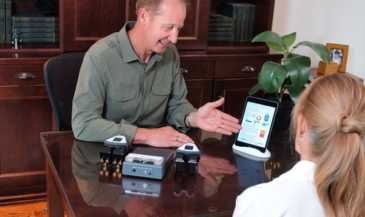
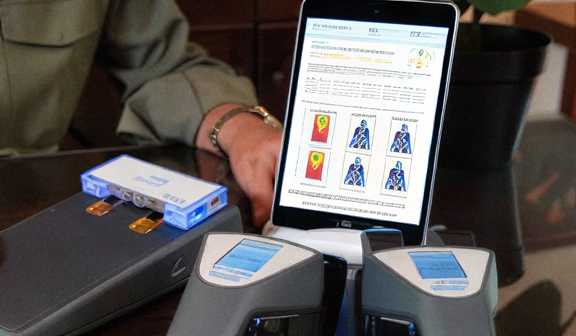
That is where INSiGHT scanning technology becomes valuable. It does not replace your hands, history, examination, or clinical judgment. It gives you objective analysis that can make aspects of nervous system performance easier to see, compare, and explain.
neuroCORE Provides a Window Into Somatic Motor Activity
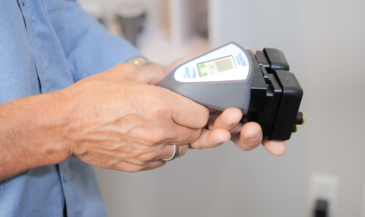
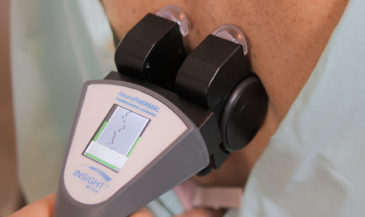
For this conversation, neuroCORE is especially relevant. The INSiGHT neuroCORE uses surface electromyography, or sEMG, to analyze electrical activity in the paraspinal musculature. In practical terms, it gives chiropractors objective information about the motor division of the nervous system and how motor activity is being expressed along the spine.
neuroCORE can help the chiropractor analyze patterns involving:
- Postural tension: How paraspinal motor activity is being expressed.
- Symmetry: How patterns compare from one side to another.
- Motor tone: Relative levels of muscle activity along spinal regions.
- Energy expenditure: How much activity the system is using to maintain posture.
- Compensation: Patterns that may deserve closer attention within the complete examination.
This distinction matters. neuroCORE is not diagnosing peripheral neuropathy, a motor neuron disease, or other nervous system problems. Peripheral neuropathy and conditions involving degeneration of a neuron or motor pathway require appropriate medical evaluation.
What neuroCORE provides is objective analysis of paraspinal motor activity. Your hands may tell you that a spinal region feels guarded or overworked. Your examination may raise another question. sEMG gives you another objective piece of the somatic nervous system picture.
Somatic Analysis Is Stronger Alongside Autonomic Analysis
The nervous system does not operate in one dimension, so our neurological assessment should not stop with one view.
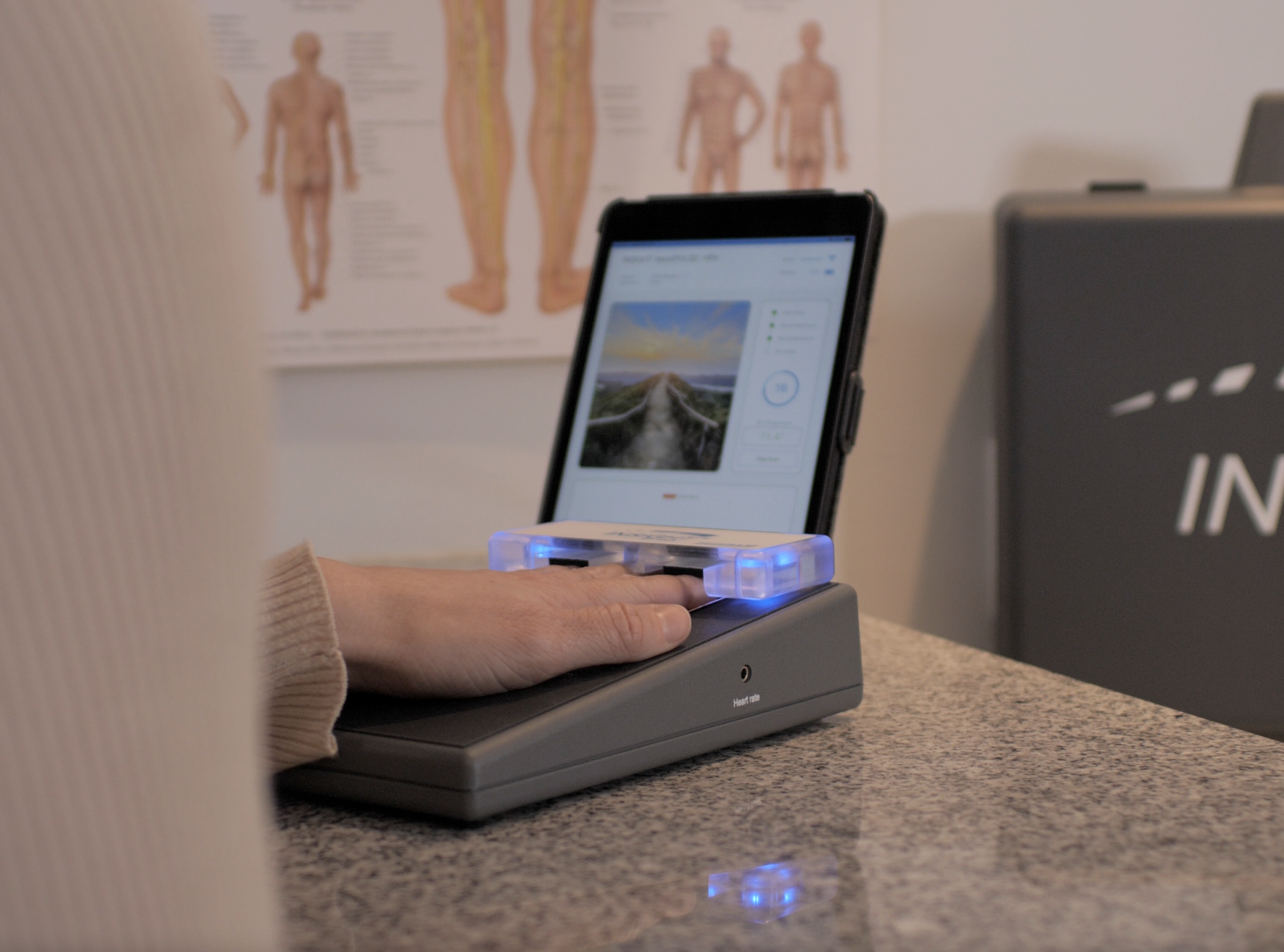
neuroPULSE analyzes Heart Rate Variability to provide information related to autonomic balance, adaptability, and reserve. neuroTHERMAL analyzes paraspinal temperature patterns associated with autonomic regulation and allows the chiropractor to complete a full spine nerve system scan quickly and reproducibly.
Together, they give the chiropractor complementary perspectives. neuroCORE provides insight into somatic motor expression. neuroPULSE looks at autonomic adaptability and reserve. neuroTHERMAL provides another view of autonomic patterns along the spinal regions.
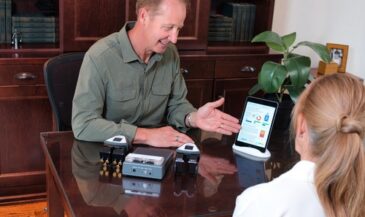
INSiGHT neuroTECH and Synapse software bring those findings together so complex neurology becomes visual and easier to communicate. The purpose is not to collect numbers because technology looks impressive. The purpose is to provide objective exam data that the chiropractor can interpret alongside the patient’s history, examination, and clinical findings.
Synapse Turns Neurology Into a Patient Conversation
The technology does not create the care plan. The chiropractor does.
The chiropractor interprets the scan views, combines them with the history and examination, identifies findings and spinal regions needing attention, and builds the care plan from the complete clinical picture. Synapse software helps organize objective data into scan views and reports that make those conversations easier.
A useful neurological scanning rhythm is baseline, response, and trajectory. The baseline establishes where the patient began. Later scans allow you to analyze how nervous system status fluctuates under care. Over time, the trajectory gives both doctor and patient a shared reference point for discussing progress.
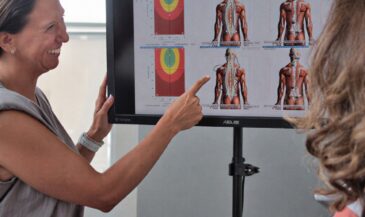
Instead of simply saying, “These muscles are tight,” you can explain that you are looking at how the nervous system is organizing motor activity along the spine. Instead of asking the patient to remember exactly how they felt weeks ago, you can compare objective findings.
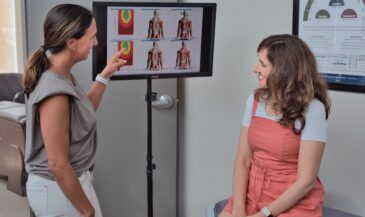
When patients see their nervous system in living color, the conversation shifts from spinal regions and joints toward nerves and performance. They begin to understand that the somatic nervous system is not an abstract anatomy lesson. It is part of the neurological communication happening in their body every day.
Bringing the Somatic Nervous System Back to the Heart of Chiropractic
The somatic nervous system reminds us that posture and movement are not merely mechanical events. Sensory receptors gather information. Afferent pathways carry that information toward the CNS. The spinal cord and brain participate in processing it, and motor pathways carry instructions outward toward muscle.
Some of that activity reaches conscious awareness. Some contributes to a reflex before the person has time to think about it. Together, these sensory and motor pathways help the body interact with the world, maintain posture, move intentionally, and respond to changing demands.
For chiropractors, there is an important middle ground. We do not need to reduce chiropractic to a mechanical story about spinal structures, and we should not claim that every somatic nervous system problem originates in the spine. Neither position tells the neurological story particularly well. The stronger position is to recognize that spinal movement, sensory information, peripheral nerves, motor nerves, the spinal cord, and brain participate in a continuous neurological conversation.
That conversation deserves objective attention. Neurological scanning gives chiropractors a way to analyze parts of that story rather than simply talking about them. neuroCORE surface EMG provides objective analysis of somatic motor activity, while neuroPULSE and neuroTHERMAL add autonomic perspectives. INSiGHT scanning technology helps bring those findings together into a broader picture of nervous system performance.
That is a tremendous opportunity for the chiropractic profession. The adjustment remains central to what we do, but our explanation of chiropractic can become much bigger than where somebody feels symptoms or which muscle seems tight.
The better question is: How well is this nervous system receiving information, organizing a response, and expressing that response through the body?
When chiropractors can objectively analyze that story and patients can see it for themselves, the conversation shifts. We stop talking only about spinal structures and start talking about nerves, adaptability, and performance. And once patients understand the why behind their care, they stop counting visits and start valuing results.