Most chiropractors think patient retention is built over time.

But in high-retention practices, commitment starts much earlier than that. In many cases, the decision to stay in care is made before the first adjustment ever happens.

Patients may not say it out loud, but they decide very early on whether this feels like a clear, intentional process or something they are simply going to try and see how it goes.

That early decision matters more than most chiropractors realize.

Commitment Comes Before Retention

Retention is not a scheduling problem. It is a commitment problem.

And commitment starts as a feeling, not a contract.

Do I feel like this doctor knows with certainty where this is going?
Do I feel like there is a plan with checks and balances, not just a visit by visit experience?
Do I have the necessary clarity on what I am committing to?

When those questions are answered early, retention takes care of itself. When they are not, patients stay cautious. They comply on the surface but hold back internally.

High-retention practices recognize these moments and address it before hands-on care even begins.

The First Adjustment Is Not the First Retention Moment

It is easy to believe that retention is earned once patients feel a physical change. That can help, but it is not the foundation.

The foundation is laid before the first adjustment.

It’s in how scan and exam reporting is introduced.
It’s in how information is structured. Telling not selling.
It’s in the experience and whether it feels intentional or improvised.

Patients are paying attention early, not just to what you say, but to how confident and organized the process feels.

When the process feels clear, patients relax. When it feels uncertain, they stay guarded.

Why Unclear Processes Lead to Drop-Off Later

Most patient drop-off does not come from dissatisfaction. It comes from ambiguity.

Hesitation often looks subtle. A patient says, “Let’s see how it goes.” They avoid long-term conversations. They quietly disengage once symptoms calm down. They miss appointments.

This does not mean they did not like the care. It means they never fully committed to the journey.

High-retention practices prevent this by removing uncertainty early.

What High-Retention Practices Do Before the First Adjustment

They slow down the right parts of the process.

They do not overwhelm patients with information.
They do not rush into care without reporting using objective findings.
Instead, they create clarity.

They help patients understand what is being measured, why it matters, how progress will be tracked, and what the phases of care look like.

When patients can see the shape of the journey, they stop evaluating whether they should stay and start focusing on progress.

Why Structure Builds Retention Faster Than Results

One of the biggest misconceptions in chiropractic is that results automatically create retention.

Results matter, but procedural structure and consistency matter first.

Without structure, even good results feel temporary. Patients assume care is finished once they feel better, because nothing has framed improvement as part of a longer process.

High-retention practices use care planning structure to anchor expectations early.

When scans, reports, and explanations follow a consistent flow, patients do not have to guess what improvement looks like. They know how change is measured and what comes next.

That clarity builds confidence long before outcomes fully show up.

Retention Grows When the Next Step Is Clear

Patients commit when the next step feels obvious.

When care feels like a sequence rather than a series of decisions, retention stops being something you have to sell. Patients assume continuity because the process supports it.

That shift is the difference between short-term compliance and long-term commitment.

Bringing It All Together

High-retention practices understand something most do not.

Patients do not decide to stay in care after results appear.
They decide when the process makes sense.

Before the first adjustment, patients are already evaluating whether this feels like a structured journey or an open-ended experiment.

When you create clarity early, commitment becomes the natural response.

Not because you pushed for it.
Because it felt right.

And that is what separates high-retention practices from the rest.


If you have practiced for any length of time, you have heard it. “Doc, my Fitbit says my cardio fitness score is low. Should I be worried?” That single question tells you a lot. Patients are no longer just asking about symptoms. They are paying attention to fitness, cardiovascular performance, and long-term capacity. A cardio fitness score feels like a grade on their overall fitness, and for many people, it carries more emotional weight than a blood pressure reading ever did.

A cardio fitness score is typically a consumer-friendly estimate of VO2 max. It is one of the few fitness metrics that blends heart rate response, oxygen handling, and the body’s ability to convert effort into usable energy. That is why it has become such a powerful predictor of long-term performance and why organizations like the American Heart Association and the American College of Sports Medicine recognize cardiorespiratory fitness as a cornerstone of good health.

For chiropractors, this metric opens a door. Not to chase devices or compete with trackers, but to elevate the conversation. When you can help a patient understand how their cardio fitness score reflects nervous system regulation, recovery capacity, and adaptation, you shift the focus from numbers to performance. And that is where neurologically-focused chiropractic belongs.

What a Cardio Fitness Score Really Measures

A cardio fitness score is most commonly linked to VO2 max, which represents the maximum amount of oxygen the body can use during intense effort. In technical terms, VO2 max is measured as milliliters of oxygen per kilogram of body weight per minute. This makes it a relative measure that reflects how efficiently oxygen intake, circulation, and muscular use work together under demand.

This is why VO2 max is often described as the gold standard for aerobic fitness and cardiorespiratory fitness. It is not a lung number. It is not just a heart rate number. It is a system-wide reflection of cardiovascular function, oxygen uptake, and muscular efficiency. Oxygen moves from the air into the bloodstream, through the artery network, and into working muscle where it is used to generate ATP. The smoother that entire chain works, the higher the fitness level tends to be.

From a clinical standpoint, a cardio fitness score answers a simple but powerful question. How capable is this body at meeting increased demand? That demand might be a workout, an outdoor run, climbing stairs, or simply handling a busy life without crashing. Higher aerobic fitness generally means greater endurance, better recovery, and more reserve.

  • Oxygen intake reflects how effectively breathing supports performance.
  • Oxygen uptake reflects how well the cardiovascular system delivers oxygen.
  • Oxygen your body can consume reflects how efficiently muscle tissue uses that oxygen.

In laboratory settings, VO2 max is measured during a maximal exercise test, often conducted on a treadmill, where expired gases are analyzed directly. In everyday life, most people rely on submaximal estimates. These do not measure oxygen directly but instead infer capacity based on heart rate patterns. Both approaches have value, but chiropractors should help patients understand the difference.

How Cardio Fitness Scores Are Estimated in the Real World

Most patients encounter their cardio fitness score through a tracker, most commonly a Fitbit. These devices do not directly measure oxygen. Instead, they perform a calculation based on heart rate response during physical activity and compare that response to expected norms for age and sex. Inputs such as resting heart rate, body weight, BMI or body mass index, and sometimes body mass are layered into the algorithm used to generate the fitness score.

Fitbit and similar platforms tend to provide the most precise estimate when they capture steady activity like an outdoor run or brisk walk, especially when GPS data is available. A gps run allows the device to match heart rate against speed and distance, producing a more stable estimate of cardio fitness level. Without GPS, many trackers report a range rather than a single number.

These estimates are influenced by beats per minute during effort, recovery patterns afterward, and baseline resting heart rate. If heart rate climbs quickly or stays elevated, the cardio fitness score often trends lower. If the same workload produces a lower heart rate over time, the fitness score usually improves. What the tracker cannot explain is why those patterns exist.

  • Heart rate during exercise reflects cardiovascular response.
  • Resting heart rate reflects recovery and regulation.
  • Body weight influences relative scoring.
  • Age and sex determine reference ranges.
  • Activity type and data quality affect accuracy.

This is where chiropractors add value. A tracker can show numbers. It cannot assess nervous system performance. When neurological distress is present, heart rate regulation, recovery, and endurance often fluctuate even when the workout routine is consistent.

Interpreting a Cardio Fitness Score in Clinical Context

Patients want to know if their cardio fitness score is good or bad. That question only makes sense in context. The same fitness score can mean very different things depending on sex and age. A value that is average for one group may be excellent for another. This is why interpretation should focus on percentile ranking rather than raw numbers.

Body composition also matters. VO2max values are relative to body weight, which means changes in body mass can influence the score even when conditioning stays the same. Muscle mass supports oxygen use, while body fat changes the relative equation. BMI may be included in the estimate, but it does not distinguish between muscle mass and fat.

Clinically, it helps to treat the cardio fitness score like a vital sign for fitness rather than a max score to chase. Look at trends. Assess how quickly heart rate recovers after effort. Consider how the patient feels during aerobic work and whether endurance is improving. In some cases, a formal exercise test may be appropriate, particularly if cardiovascular symptoms or coronary concerns are present. Collaboration with medical professionals is part of responsible care.

From a chiropractic industry perspective, the opportunity lies in translation. Patients already trust their tracker. They just need help understanding what it reflects about their overall fitness and nervous system status.

Improving Cardio Fitness Score Through a Nervous System Lens

Improving a cardio fitness score does not require extreme training. It requires consistency, recovery, and adaptability. Aerobic fitness improves when the body learns to meet demand with less strain. Over time, heart rate response becomes more efficient, endurance improves, and overall fitness rises.

Foundational aerobic work builds capacity. Adding vigorous intervals challenges the system and supports adaptation. Strength training supports movement efficiency and reduces wasted energy. Together, these approaches support better fitness without overwhelming the system.

  • Steady aerobic activity builds base fitness.
  • Vigorous intervals improve oxygen uptake.
  • Strength training supports endurance.
  • Recovery supports adaptation.

Recovery is where nervous system regulation shows up. Poor sleep, chronic stress, and sympathetic overdrive often elevate resting heart rate and slow recovery. When recovery improves, fitness often follows. This is why patients who exercise regularly can still struggle to improve their cardio fitness score if nervous system performance is compromised.

In some cases, submaximal testing or a treadmill-based assessment can provide additional insight. The goal is not to push harder but to adapt better.

Using INSiGHT Neurological Scanning to Add Clarity to Cardio Fitness Scores

A cardio fitness score tells patients what is happening. INSiGHT scanning helps explain why. Wearables estimate fitness using an algorithm used to blend heart rate data with demographic inputs. They cannot assess nervous system status. Neurological scanning can.

INSiGHT neuroPULSE HRV scanning provides objective insight into adaptability and recovery, directly relevant to cardiorespiratory fitness. neuroTHERMAL scanning highlights autonomic patterns that may influence cardiovascular responses. neuroCORE sEMG scanning shows neuromuscular energy demands that affect endurance and efficiency.

INSiGHT does not generate care plans. It provides objective exam data and reports that support chiropractors as they assess, interpret, and guide care. When patients already track fitness, scanning helps them connect cardio fitness score trends to nervous system performance. This allows chiropractors to track your progress in a way that feels meaningful rather than confusing.

Turning Fitness Scores Into Performance Confidence

A cardio fitness score is not the goal. It is a signal. It reflects how the body handles demand right now. Chiropractic, supported by neurological scanning, helps patients improve how they handle demand over time.

When patients understand how fitness, heart rate regulation, oxygen use, and nervous system performance work together, they stop chasing numbers and start valuing performance. That shift supports better fitness, cardiovascular health, and long-term resilience. And that is where chiropractors belong in the modern conversation about fitness and good health.

There’s a moment in every chiropractic practice that quietly determines whether a patient stays or disappears.

It’s not the first visit. It’s not at the report of findings. It’s the visit where symptoms start to soften, life feels a little easier, and the patient begins to wonder if anything meaningful is still happening at all.

They don’t say it out loud right away. But eventually it comes up. Why am I still here?

Thermographic scanning exists for that moment. Not to convince. Not to pressure. But to show, objectively and clearly, how the nervous system is responding beneath the surface.

This is where thermography continues to matter in chiropractic. In a healthcare environment shaped by data, visuals, and transparency, thermographic scanning helps move conversations away from opinion and toward observable function. When used appropriately, it allows chiropractors to show how the nervous system is adapting over time, even when symptoms fluctuate or temporarily disappear.

Thermographic scanning is not about chasing heat or creating fear. It is about observing regulation. When neurological distress is present, blood flow and body temperature regulation can shift in predictable ways. Those temperature changes create patterns along the spine that can be measured, tracked, and communicated. That is why thermography scanning remains one of the most practical tools for neurologically focused chiropractic.

What Thermography Scanning Is and How Chiropractors Use It

In chiropractic clinical practice, thermography scanning refers to the analysis of skin temperature along the spine, most often through paraspinal readings. The purpose is not diagnosis. The purpose is functional observation. When the nervous system is regulating well, side-to-side temperature symmetry is generally present. When regulation is strained, a measurable temperature difference may appear at one or more spinal levels.

This is why thermography is used in chiropractic as a functional assessment rather than structural imaging. Tools like x-ray imaging show anatomy. Thermography measures how the nervous system is influencing blood flow and heat in the human body in real time. It allows chiropractors to observe regulation rather than guess at it.

Modern thermography relies on infrared thermography and infrared imaging to detect radiant heat emitted from the skin. Every person emits infrared energy based on body temperature. Thermography measures that output and translates it into readable thermal images or a thermogram. In chiropractic settings, the focus is usually along the spine, where infrared thermography scans compare left and right skin temperature measurement at each segment.

It is important to understand what thermography is and what it is not. Thermography is used in chiropractic as a complementary assessment. It does not replace imaging, physical examination, or clinical judgment. In broader healthcare language, thermography is considered  adjunctive and informative. When chiropractors use thermography appropriately, it strengthens interpretation, supports communication, and provides objective context for chiropractic care.

  • It helps establish a baseline early in care.
  • It supports trend tracking through repeated scans.
  • It makes functional change visible to patients.

For many chiropractors, this is why they continue to use thermography scanning. It shifts conversations away from symptom-only thinking and toward function, regulation, and nervous system performance.

The Neurological Science Behind Thermography Scanning

The value of thermography scanning rests on neurology. Skin temperature is regulated primarily by the sympathetic nervous system, which controls vascular tone through constriction and relaxation. When sympathetic output changes, blood flow to the skin changes, and surface temperature responds. Thermography measures those outputs, not feelings or perceptions.

This distinction matters. Thermography scanning does not look for damage. It looks for altered regulation. When the nervous system is under neurological distress, regulation may become uneven. That uneven output often shows up as temperature differences along the spine. This is why thermography provides insight into how the nervous system is functioning, not just how a patient feels.

In a well-regulated system, left and right temperature readings along the spine tend to be similar. When temperature differences can indicate altered autonomic output, chiropractors take notice. Paraspinal thermography focuses on these side-to-side comparisons, because symmetry reflects balance and asymmetry suggests strain. When patterns repeat at the same spinal regions, they become clinically meaningful.

These findings are often described as indicating nerve interference. That language is not diagnostic. It reflects altered autonomic regulation that may correlate with nerve tension, vertebral involvement, or patterns associated with subluxation or vertebral subluxation. Thermography measures temperature changes influenced by the nervous system, allowing chiropractors to observe regulation patterns rather than speculate.

thermal

Paraspinal Thermography in Chiropractic Clinical Practice

Paraspinal thermography is the most common application of thermography scanning in chiropractic. It focuses on temperature output along the spine, comparing one side of the spine to the other at consistent intervals. The goal is not perfection on a single scan. The goal is consistency and trend analysis.

When chiropractors use paraspinal thermography correctly, it becomes a reliable pattern tool. Repeated scans under consistent conditions help identify areas that may need attention and track how regulation changes with chiropractic care. This is why chiropractors use paraspinal thermography rather than isolated whole-body imaging in routine clinical practice.

Certain regions receive particular attention, especially the cervical and upper cervical spine. Upper cervical chiropractic care has historically emphasized objective measures, and thermography has often played a role in monitoring regulation patterns in those regions. Paraspinal thermography does not diagnose misalignment, but consistent thermal asymmetry may correlate with vertebral involvement, subluxations, or vertebral subluxation patterns.

  • Heat may reflect increased activity or inflammation.
  • Cooling may reflect reduced activity or chronic dysregulation.
  • Asymmetry is often the most clinically useful finding.

Consistency matters. Environmental factors such as airflow, recent activity, and ambient temperature influence skin temperature measurement. Reliable thermography scanning requires controlled conditions and repeatable protocols. When those standards are followed, thermography provides dependable insight that supports chiropractic as an objective, data-informed approach.

Why Thermography Scanning Improves Communication, Retention, and Care Planning

Patients rarely leave chiropractic care because they dislike the experience. They leave when they stop understanding why care continues. Symptoms alone are a poor scoreboard. Some patients feel better quickly while regulation remains strained. Others report little change while objective measures improve.

Thermography scanning changes that conversation. It gives patients visual proof that something measurable is being tracked. When patients see thermal patterns and temperature differences along the spine, they understand that chiropractic care is addressing function, not just comfort. This is one reason thermography is used in chiropractic to support retention and long-term engagement.

Thermal images and thermographic views allow chiropractors to explain progress without relying solely on symptoms. When patterns normalize over time, patients see improvement even if day-to-day sensations fluctuate. This clarity supports a care plan built on objective findings, not persuasion.

Importantly, thermography does not create care plans. It provides data. The chiropractor interprets that data alongside other findings to design appropriate chiropractic adjustments and recommendations. When patients understand what is being measured and why, they are far more likely to stay engaged and committed.

thermal

Integrating Thermography Scanning with INSiGHT Neurological Technology

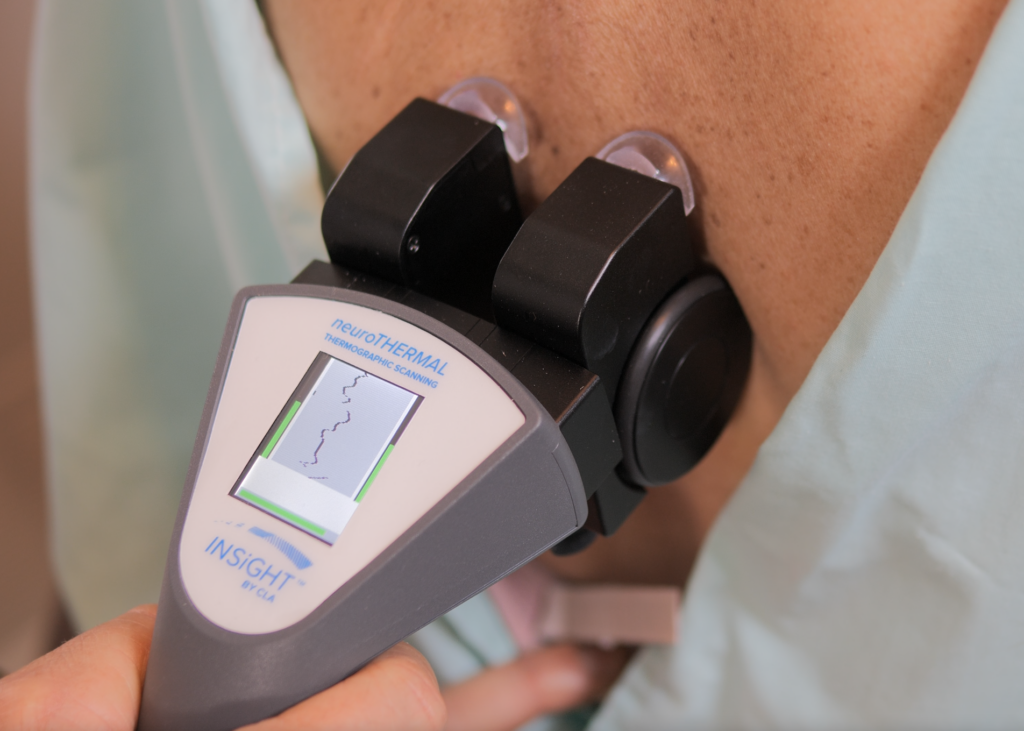
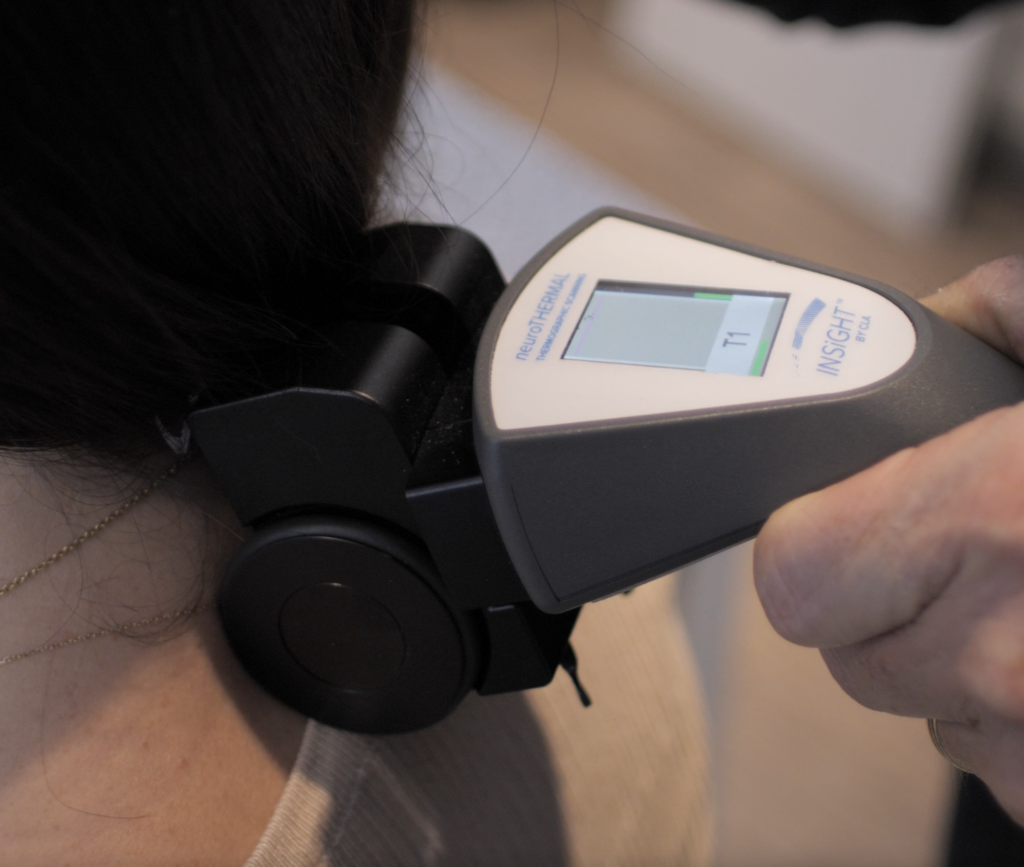
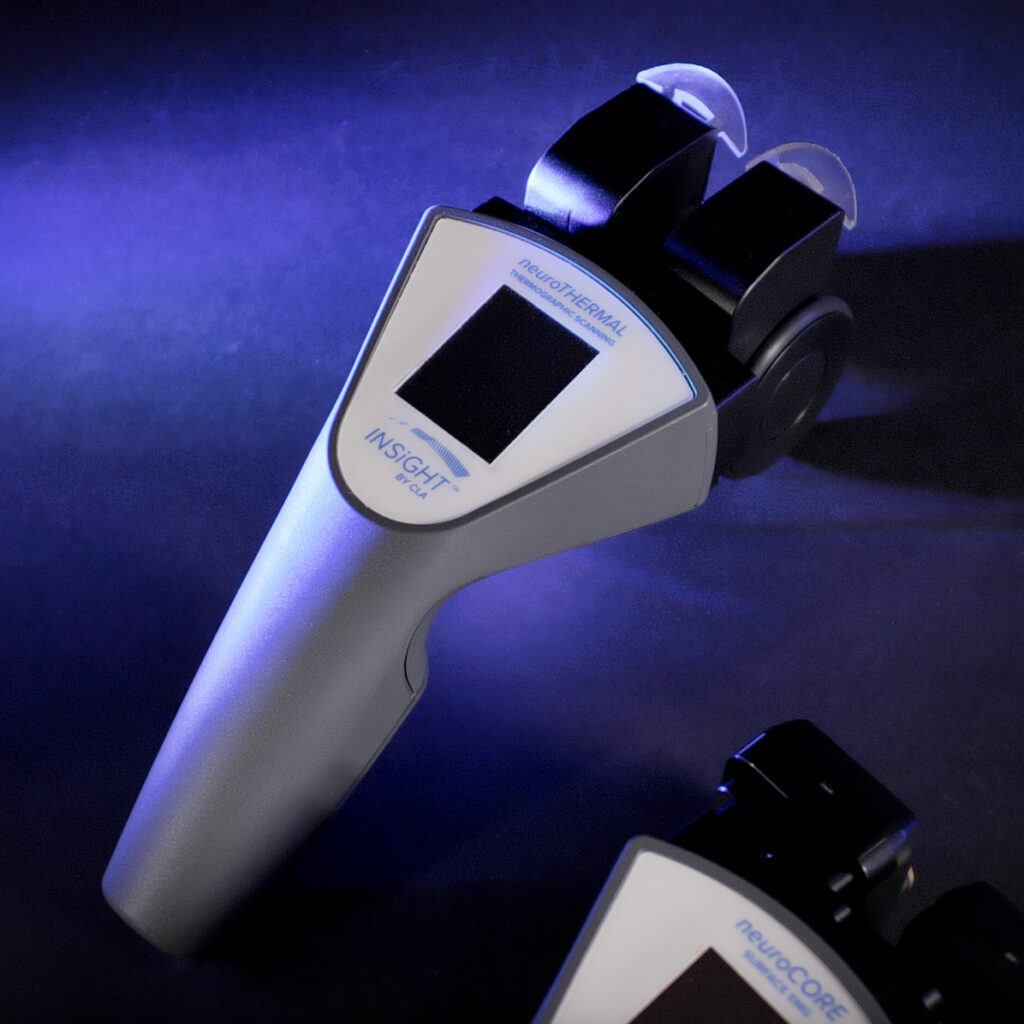
Thermography scanning reaches its full potential when integrated into a comprehensive neurological assessment. INSiGHT scanning technology was designed with this exact goal in mind. The INSiGHT neuroTHERMAL performs precise paraspinal thermography using advanced infrared imaging, allowing chiropractors to complete a full spine nerve system scan efficiently and consistently.

The neuroTHERMAL captures temperature patterns along the spine and nervous system using non-invasive infrared thermography. Historically, thermography was performed as a thermographic study using a probe or dual probe instrument, including a probe instrument for comparing one side or a dual probe instrument for comparing left and right. Modern infrared thermography scans have improved accuracy and reproducibility while preserving the same clinical intent.

When thermography scanning is combined with INSiGHT neuroPULSE and INSiGHT neuroCORE, chiropractors gain a broader view of autonomic regulation, adaptability, and motor tone. NeuroCORE uses surface electromyography to assess postural and muscular patterns, while neuroPULSE reflects autonomic balance. Together, these tools support interpretation within today’s chiropractic model.

INSiGHT does not generate care plans. It generates objective exam data and scan views that support chiropractor interpretation. This allows doctors of chiropractic to identify areas used to identify neurological patterns, establish a baseline, and track functional change with confidence. For practices offering specialized care, this integrated approach strengthens communication and clinical certainty.

Screenshot

Seeing the Nervous System More Clearly with Thermography Scanning

Thermography scanning remains relevant because it aligns with the core chiropractic focus on the spine and nervous system. It helps chiropractors observe regulation, communicate findings clearly, and guide patients toward better function without relying on fear or speculation.

When used responsibly, thermography scanning provides objective insight into temperature patterns influenced by the sympathetic nervous system. It helps patients understand why chiropractic care continues beyond symptom relief and supports trust through visible, measurable change.

Integrated with INSiGHT scanning technology, thermography scanning becomes part of a clear neurological story. It helps chiropractors make the invisible visible and reinforces chiropractic as an objective, function-focused approach.

Surface electromyography has a funny way of cutting through noise in an exam. A patient can walk in with a dozen symptoms that fluctuate, a posture that “looks fine,” and a story that sounds complicated. Then you run surface electromyography, and in a moment the body tells you something simple: how hard the nervous system is working to manage gravity.

In chiropractic, electromyography is not about diagnosing muscle disease. It is about seeing motor tone, balance, and efficiency in a way that is objective and repeatable. A surface EMG scan gives you a practical look at neuromuscular control, and that makes it one of the most valuable neurological scanning tools in a modern, neurologically focused practice. When you use sEMG correctly, you move from opinions to patterns, from guesswork to real exam data, and from symptom-chasing to nervous system performance.

When patients see their surface electromyography pattern in scan views and in scan reports, you can feel the shift. They stop thinking you are only working on a joint or a single spinal region and start understanding the “why” behind the care plan. That is what objective scanning is supposed to do. It makes the invisible visible, and it gives both doctor and patient something solid to build on.


What Surface Electromyography Is and Why It Matters in Chiropractic

Let’s define it clearly. Electromyography is the process of measuring the electrical activity associated with neuromuscular function. In chiropractic, surface electromyography focuses on the paraspinal muscles because they are the daily workhorses of posture, stability, and movement coordination. Surface EMG is non-invasive. It uses a surface electrode to detect the electrical output of muscle activity through the skin surface. That means the scan is comfortable, efficient, and appropriate for patients across the life cycle.

It is also important to name what surface electromyography is not. Chiropractic surface electromyography is not the same as intramuscular EMG. Intramuscular EMG is a needle-based test used in medical settings to evaluate certain degenerative neuromuscular and nerve conduction conditions. Chiropractic SEMG is used to evaluate patterns of neuromuscular tone and organization related to neurological interference, compensatory reactions and postural tension. Surface EMG and intramuscular EMG ask different questions, and they are used for different clinical goals.

Why does this matter? Because the motor system is often where compensation shows up first. Before a person can articulate what they feel, the body is already adapting. Surface electromyography helps you see those adaptations. It gives you objective insight into whether the spinal postures are organized or scattered, balanced or biased, efficient or expensive. In practical terms, it supports the use of surface electromyography as a foundational scan for baseline exams and progress evaluations.

In many practices, this is the scan that changes the conversation. When a chiropractor can point to a clear electromyography pattern and say, “Here is where your nervous system is overworking, and here is where it is under-recruiting,” the patient understands the purpose of ongoing care. That clarity does not come from fear. It comes from visible, reproducible scan data.


The Neurological Science Behind Surface EMG Scanning

Surface electromyography is a straightforward idea with a sophisticated foundation. The nervous system communicates with muscle through electrical impulses. Those impulses originate at the motor unit, which is the motor neuron and the muscle fibers it controls. When that motor neuron fires, it generates an action potential. The combined output of many motor unit firings becomes the myoelectric signal we can detect at the surface of the body. In other words, surface EMG is capturing a biological signal that reflects neuromuscular control.

Because the scan is gathered at the surface of the skin, we are measuring a summation of activity rather than isolating deep structures. That is the clinical beauty of SEMG in chiropractic. We are not chasing a single muscle fiber. We are assessing how the spinal system is behaving as a coordinated unit. This is why the term surface myoelectric shows up in research discussions. The scan reflects myoelectric potentials with surface electrodes, and those signals are influenced by the tissue layers between muscle and sensor.

That brings us to what makes results trustworthy: signal acquisition and consistency. A clean sEMG signal depends on stable electrode contact and a repeatable scanning protocol. EMG electrodes need a reliable interface with the skin surface, and the electrode surface should be placed consistently from scan to scan. The best practices are not complicated, but they are important: consistent posture, consistent scan points, and consistent setup. This improves signal quality and makes it far easier to compare recordings over time. It also helps the chiropractor interpret trends rather than reacting to small fluctuations.

A few physiological realities are worth remembering. Subcutaneous fat on myoelectric signal transmission can reduce amplitude, meaning fat on myoelectric signal amplitude can dampen the raw signal reaching the sensor. That is not a flaw. It is simply part of interpreting a surface measurement. Chiropractic interpretation focuses less on isolated amplitude and more on symmetry, distribution, and pattern organization. When the scan is collected consistently, electromyography becomes a reliable tool for tracking change in neuromuscular organization under care.


Clinical Interpretation of Surface Electromyography in Chiropractic Practice

Now we get to the part that matters most: what to do with the scan. Surface electromyography becomes clinically meaningful when you interpret it as a pattern rather than a point. In chiropractic SEMG, we are typically evaluating whether the system is firing high, running low, or running unevenly. The most common interpretation categories include hypertonic output, hypotonic output, asymmetry, and disorganized distribution. These patterns reflect how the nervous system is managing stability, and reacting to the gravitational load.

Here is a practical way to think about it. When the motor system is compensating, it spends extra energy to do simple things. It is expensive to manage gravity. In that context, surface EMG amplitude is not about “tight muscles.” It is the nervous system paying a higher cost to maintain posture. A global pattern of elevated output suggests increased effort. A scattered pattern suggests poor coordination between spinal regions. A consistent left-right imbalance suggests the body is not sharing load well and is relying on biased strategies for stability.

Most chiropractic electromyography systems present this data visually, often with color coding relative to a normative reference. Those EMG images help patients understand what the chiropractor is describing. It is also where you anchor your progress conversation. Symptoms fluctuate. Scan patterns tend to change more gradually. When you compare recordings, you can show whether the system is organizing toward efficiency. In that way, EMG data provides proof your care is making a difference without relying on the patient’s day-to-day symptom report.

To keep interpretation consistent, focus on these essentials:

  • Overall output: is the system overworking or conserving energy appropriately?
  • Symmetry: are left and right sides balanced, or is one side consistently driving?
  • Pattern: is the spine organized top-to-bottom, or is the activity scattered?
  • Segment relationships: are there clusters of abnormal activity that suggest neurological interference patterns?

From a workflow standpoint, this is why recording matters. When the recording of emg signals is standardized, trends become obvious. That is also where a good EMG recording protocol protects you from overinterpreting noise. You are not trying to make surface electromyography sound like electrical and electronics engineering. You are trying to make it clinically useful, repeatable, and clear.


Surface EMG as Part of a Neurological Scanning Model

Surface electromyography is powerful on its own, but it becomes far more valuable when it is part of a broader neurological scanning model. In neurologically focused chiropractic, the goal is not a single snapshot. The goal is a profile. Surface EMG gives insight into the motor system. Other scans help evaluate autonomic regulation and adaptability. When those data points are viewed together, chiropractors stop “chasing segments” and start leading with neurological clarity.

This is where the use of surface EMG becomes strategic. You baseline the patient, then you re-scan at intentional intervals to see how the nervous system is adapting. The scan is not there to react to every symptom fluctuation. It is there to track neurological organization over time. This is especially important with kids, athletes, and stressed-out adults who normalize neurological distress. Scanning gives you a neutral reference point. It also makes your report of findings more consistent because you are talking about objective patterns instead of subjective impressions.

When practices adopt this approach, surface electromyography becomes the motor lens through which you evaluate energy usage and coordination. It supports care plan conversations that feel logical and grounded. It also strengthens retention because patients can see progress. That is the heart of neurological scanning. It keeps the conversation focused on nervous system performance rather than only symptom control.

In research language you may see phrases like use of surface, based on surface, used in surface, surface EMG based, and even estimation of surface activity. In the clinic, the idea is simpler: repeatable scans help you evaluate whether the motor system is becoming more efficient under care.


INSiGHT neuroCORE and the Role of Surface Electromyography in Modern Chiropractic

For surface electromyography to work in a real chiropractic office, it has to be reproducible, practical, and easy to communicate. That is exactly where INSiGHT scanning technology fits. INSiGHT neuroCORE is the surface electromyography component of the INSiGHT neuroTECH ecosystem. It is designed for chiropractic SEMG scanning of paraspinal motor activity so doctors can collect objective exam data and compare recordings across time. The scan is fast, comfortable, and built for consistent use, which is what allows a chiropractor to track trends rather than rely on one-time impressions.

INSiGHT scanning technology does not create care plans. It produces objective scan results and reports. The chiropractor interprets that data and designs the care plan. INSiGHT software powered by Synapse supports that workflow by translating EMG signals into scan visuals that patients can quickly understand. Practically, it functions like a multi-channel surface approach, gathering multiple data points along the spine rather than a single reading. In that context, multi-channel surface electromyography helps you see distribution and symmetry patterns that matter clinically. It also helps you communicate why care is focused on neurological function, not just on a single sore region.

It is worth mentioning that the wider electromyography world includes many EMG applications beyond chiropractic, including lower limb EMG studies in sports and rehab, high-density surface EMG arrays in laboratories, and high-density surface electromyography mapping for research. You will also see terms like emg systems, signal processing, EMG signal processing, semg signal processing, systems and signal processing, and filtering of surface noise. Some research groups explore machine learning and classification of EMG signals, sometimes described as EMG classification, to sort movement patterns. Chiropractic does not need to become a lab. Chiropractic needs reliable data in the exam room. When the surface electromyography acquisition process is consistent, you can interpret patterns confidently and communicate them clearly.

From a scanning standpoint, the essentials still apply. Good signal acquisition means stable contact, consistent electrode placement, and a scan protocol that supports dependable recording. When that is in place, the raw EMG signal and even a raw EMG snapshot can be collected in a way that is clinically meaningful. The goal is not to overwhelm patients with technical talk. The goal is to show them how the nervous system is managing muscle force and stability, then use that clarity to support care decisions. That is the application of surface EMG in a neurologically focused practice, and it is why INSiGHT neuroCORE fits so naturally into a scan-centered workflow.


Where This Leads: A More Certain, More Understandable Chiropractic

Surface electromyography belongs in chiropractic because it makes the motor story visible. It helps you see how the nervous system is distributing tone, where neuromuscular coordination is efficient, and where compensation is costing the patient energy. It also gives you a reliable way to track change when symptoms fluctuate and stories get messy. When surface electromyography is used consistently, it strengthens the exam, the report of findings, and the long-term care plan conversation.

It is also a reminder of something chiropractors have always known. The body adapts. The nervous system organizes. When it cannot organize well, the motor system reveals it. SEMG gives you a window into that reality without needles and without guesswork. Even the basic distinctions matter: there are two kinds of EMG, and chiropractic surface EMG and intramuscular EMG are not interchangeable. Chiropractic SEMG is designed for repeatable scans, not disease diagnosis. That distinction keeps the conversation accurate, professional, and aligned with the purpose of neurological scanning.

If you want surface electromyography to have real impact in your practice, make it part of a scanning model, not a one-off event. Build baseline recordings, compare progress scans, and use the scan visuals to keep patients anchored to what matters: nervous system performance. And when you are ready to integrate this into a consistent exam rhythm, INSiGHT scanning technology, including INSiGHT neuroCORE and the INSiGHT software powered by Synapse, gives chiropractors a practical way to collect, interpret, and communicate surface EMG data with clarity. That is how scanning becomes more than technology. It becomes a language of certainty.

One final technical note for the chiropractors who like precision. The surface EMG signal you see is influenced by the surface area of detection, the tissue layers under the surface of the skin, and the quality of contact at the electrode surface. EMG signals are recorded through recording electrodes and an EMG sensor interface, producing surface electromyographic signals that can be evaluated through EMG signal analysis and analysis of EMG signals. That is the nature of the EMG. When you respect those fundamentals and keep your protocol consistent, you can confidently say that surface EMG changes reflect meaningful shifts in neuromuscular organization under care. That is working on EMG the right way in chiropractic, and it is how the use of surface electrodes supports better understanding, better communication, and better follow-through.

 

+